Contest and exhibition: UNDER 35 - Salone del Mobile 1998
9 - 14 April 1998
Also in 1998, in conjunction with the Salone del Mobile, OPOS presents its usual exhibition of furniture prototypes created by designers under 35.
Now in its eighth edition, the initiative has become a point of reference for young designers and an opportunity for companies in the sector to find new inspiration.
Multiform proposals far from the temptation to “set a precedent” and represent trendy choices
The OPOS selection and the attempt to build an OBSERVATORY on youth production which, in the heterogeneity of voices, seeks its true meaning.
This year, 328 projects were submitted from all over the world, of which 18 were selected for the exhibition.
Contest announcement:
Once again in 1998, to coincide with the Salone del Mobile in Milan, OPOS will present its traditional exhibition of prototypes designed and created by designers born after December 31, 1961. The exhibition will be the result of a selection made by a group of university professors and journalists in the sector, as well as by the promoters of the event. The initiative, carried out without sponsors or public support, albeit with limited means, continues to yield concrete results, and an increasing number of objects presented by OPOS have subsequently been included in the catalogs of the most important companies in the sector.
The requirements for participation in the selection are:
ENVIRONMENT
As a complex and layered system of relationships and exchanges that cannot be ignored, it encourages OBSERVING, SEARCHING, ASKING, TOUCHING, and FEELING as prerequisites for any possible and coherent form of design.
PLAYING WITH WORDS TO QUESTION MEANINGS
The free connection between words and meanings that constantly fill our gestures and gazes every day must be recomposed in the name of a coherent and conscious search for the values that the design object could restore.
Interface – modular – multiple – communicative – responsible – sustainable – texture – pattern – interactive – recyclable – renewable – rechargeable – efficient – performative – ecological – biological – compatible – durable – lightweight – effective – maintainable – shareable – updatable – integrable – assemblable – simple – rapid – exact – visible – virtual – multiple – dense – contrast – experience – perception – relationships – separation – integration – empty – full – creative – random – boundary – limit – nomadic – sedentary – hybrid – skin – surface – matter – relationships – center – natural – artificial – sensual – enclave – interstice – cloning – memory – organic – inorganic – fetishistic – variable – desire – nihilistic – mystical – passionate
The design process must carefully consider:
The use of materials, verifying their technical and expressive potential.
The study and experimentation of “new” materials derived from recycling.
The relationship between use over time and the resistance of the material (the material does not necessarily have to be “poor”; the long life of the object redeems the initial production costs and the “preciousness” of the material used).
Technological and production processes.
The recovery and assembly of joints; in-depth study of the compatibility between different and homogeneous materials (with particular attention to finishes).
The potential for reuse and recycling (both of the material for a “second life” and of the object itself).
The impact of the object-waste on the ecosystem.
All these parameters make up an indicative assessment of “energy costs” aimed at a more complex and careful elaboration of the design project.
Purpose: The object must once again stimulate active and curious use on the part of those who experience it; it must develop an internal creative resource, capable of educating people to use it in a different way and not simply to consume it.
Purpose: The object must stimulate active and curious use by those who experience it; it must develop an internal creative resource, capable of educating people to use it in different ways and not simply for consumption.
Costs: The price of the finished object must not become a barrier to large-scale distribution. Easy reproducibility must be a prerequisite for an essential and easily understandable design.
The OPOS UNDER 35 projects for the 1998 edition were selected by:
Clara Bona; Architect, journalist
Fabio Bortolani; Designer
Giampiero Bosoni; Architect, Professor of Theory and History of Industrial Design
Roberto Cesaretti; Artist
Maurizio Cistellini; Entrepreneur
Roberto Giussani; Architect
Luca Molinari; Architect, Writer
Susanna Ravelli; Designer
Pia Karin Spreafico; Architect
Paolo Tuminelli; Design manager, journalist
Alberto Zanone; Designer
OBJECTS SELECTED UNDER 35 OPOS 1998
PROJECTS RECEIVED – 328
DESIGNERS – 196
ITALIAN – 159
FOREIGNERS IN ITALY – 7
FOREIGNERS – 30
PROJECTS SELECTED – 18
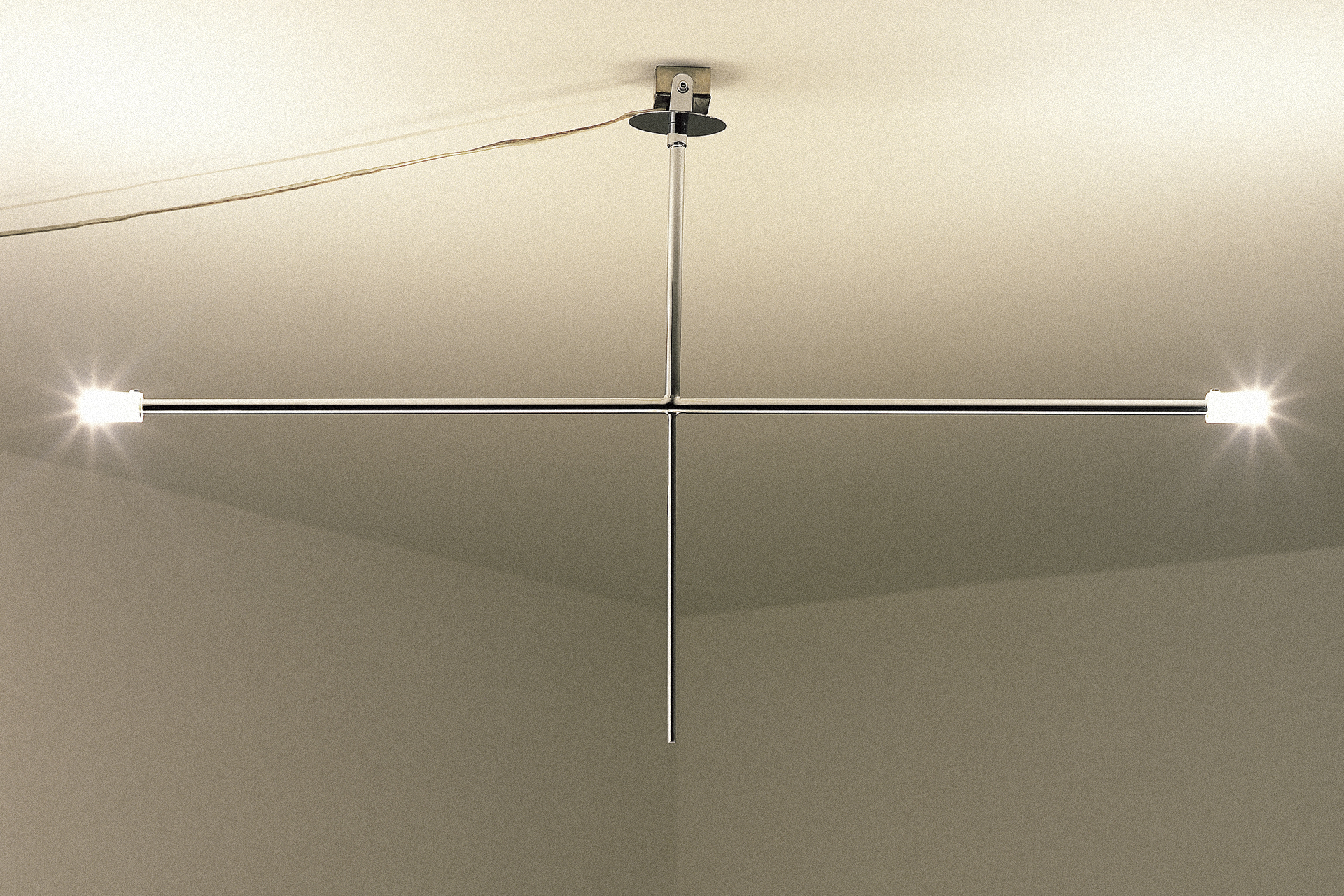
TAC
Francesco Argenti, Enrico Azzimonti (Italy)
Ceiling lamp. It explores construction technologies by creating an innovative use of ceilings. Thanks to the magnet, it frees artificial lighting from being constrained by fixed light points and wiring.
Materials: Metal, magnet, and halogen lamps (Max. 180 Watt).
Size: Various
U’
Project: Alberto Artesani (Italy)
Cigarette holder.
Materials: Steel
Size: Height 4 cm

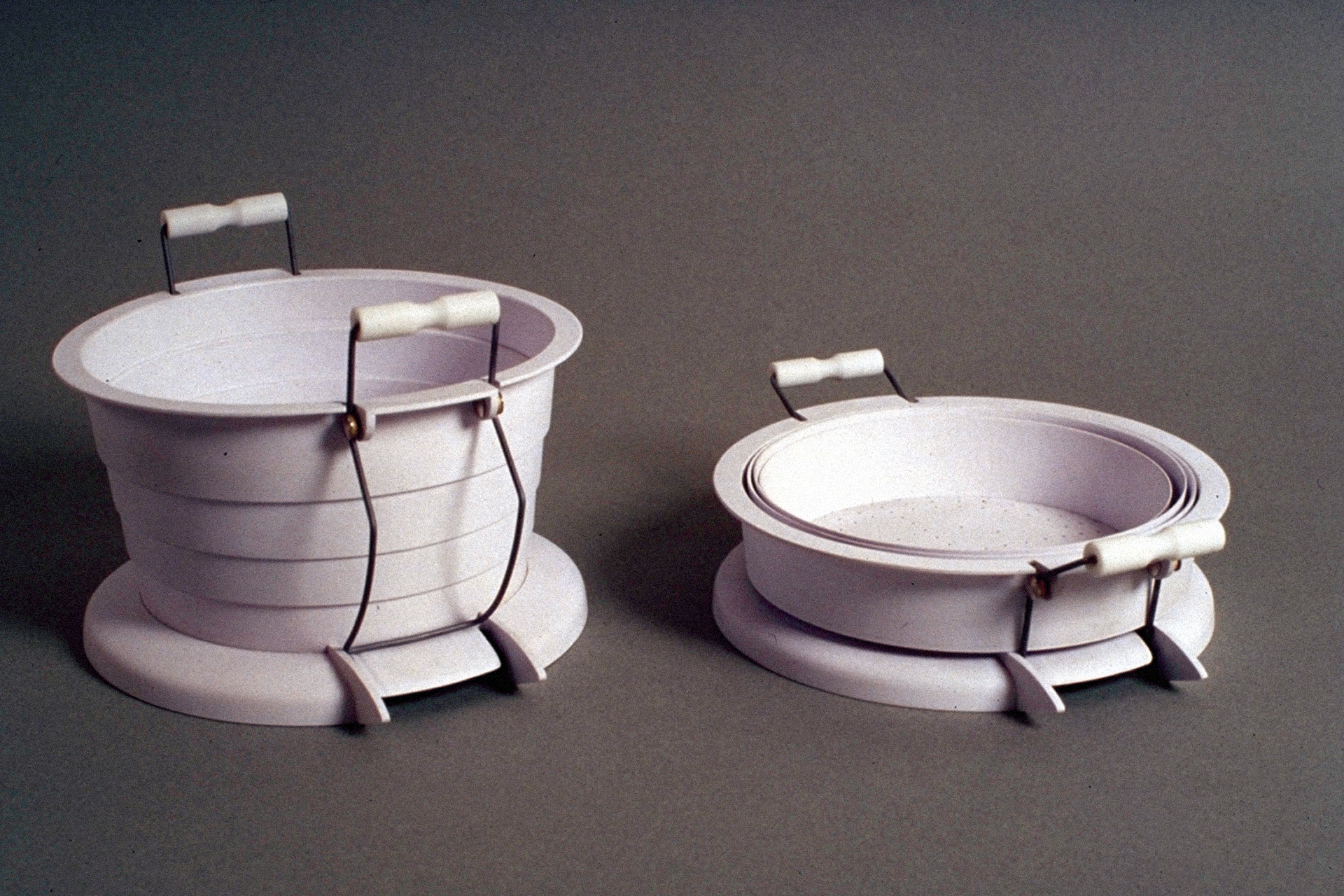
COLAPASTA
Project: Bau Q Studio (Italy)
Collapsible colander made with a single injection mold.
Materials: Polypropylene and stainless steel
Size: Open 25 x 15 cm ; Closed 25 x 7 cm
SOLOACQUA
Project: Walter Becchelli (Italy)
Accessory for the controlled growth of potted plants. Waterproof polycarbonate bands, cut to different lengths and wrapped in concentric rings inside the pot, regulate root development by preventing radial growth. To allow growth, simply remove the first ring so roots can grow until they reach the next one.
Materials: Polycarbonate
Size: Height 20 cm ; Ring lengths: 46 / 61 / 77 cm

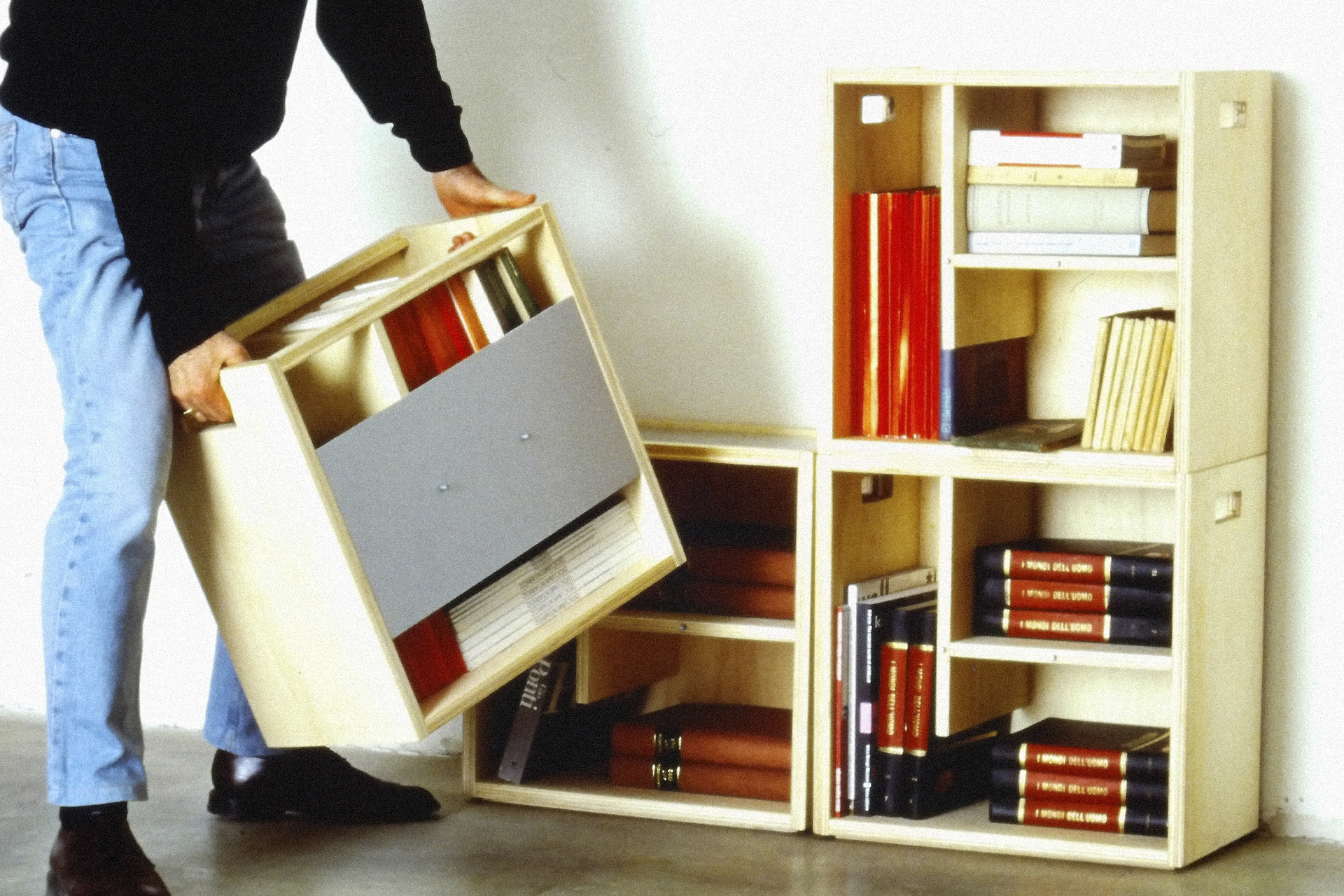
ZINGARELLO
Linda Bigatti (Italy)
Modular element suitable for displaying and organizing books, magazines, and videotapes, as well as for transport.
Materials: Poplar plywood and sandblasted aluminum
Size: 50 x 50 x 29 cm
COLORS
Lorenzo Gecchelin (Italy)
Integration of tactile and visual experience. The pencils have soft, rounded grips for warm colors, and hard, angular grips for cool colors. Color recognition is enhanced through variable grip textures that increase with the position of the color on the chromatic wheel.
Materials: Wooden pencils
Size: Diameter 36 cm

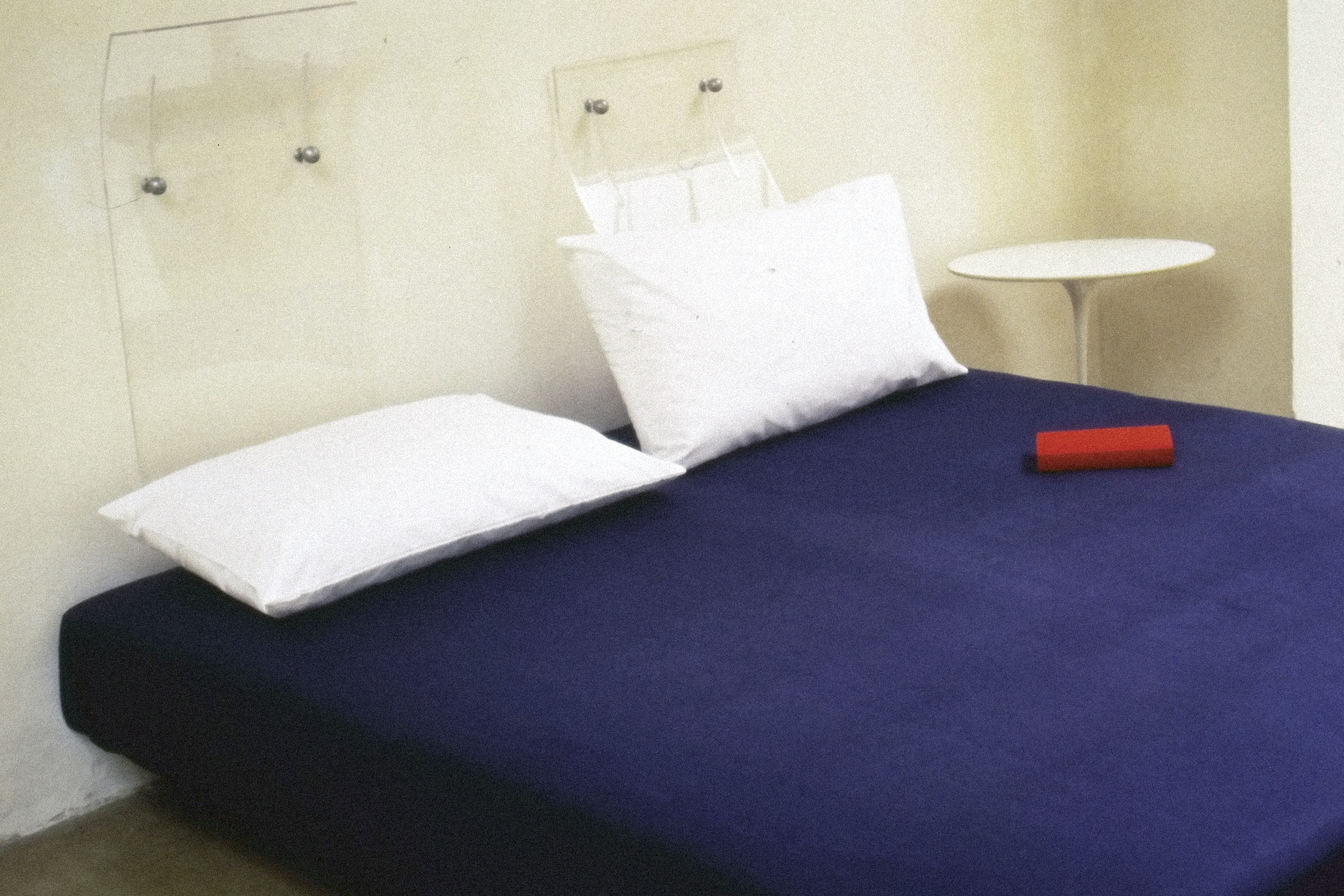
DORMI LEGGI
Lorenzo Gecchelin (Italy)
Plexiglass panel designed to be placed behind the back, with the necessary tilt to support a pillow and allow for comfortable reading. The panel is cut and bent to create a rigid and stable inclined surface, yet extremely compact so that it virtually disappears behind the back when not in use.
Materials: Plexiglass
Size: 45 x 75 x 0.5 cm
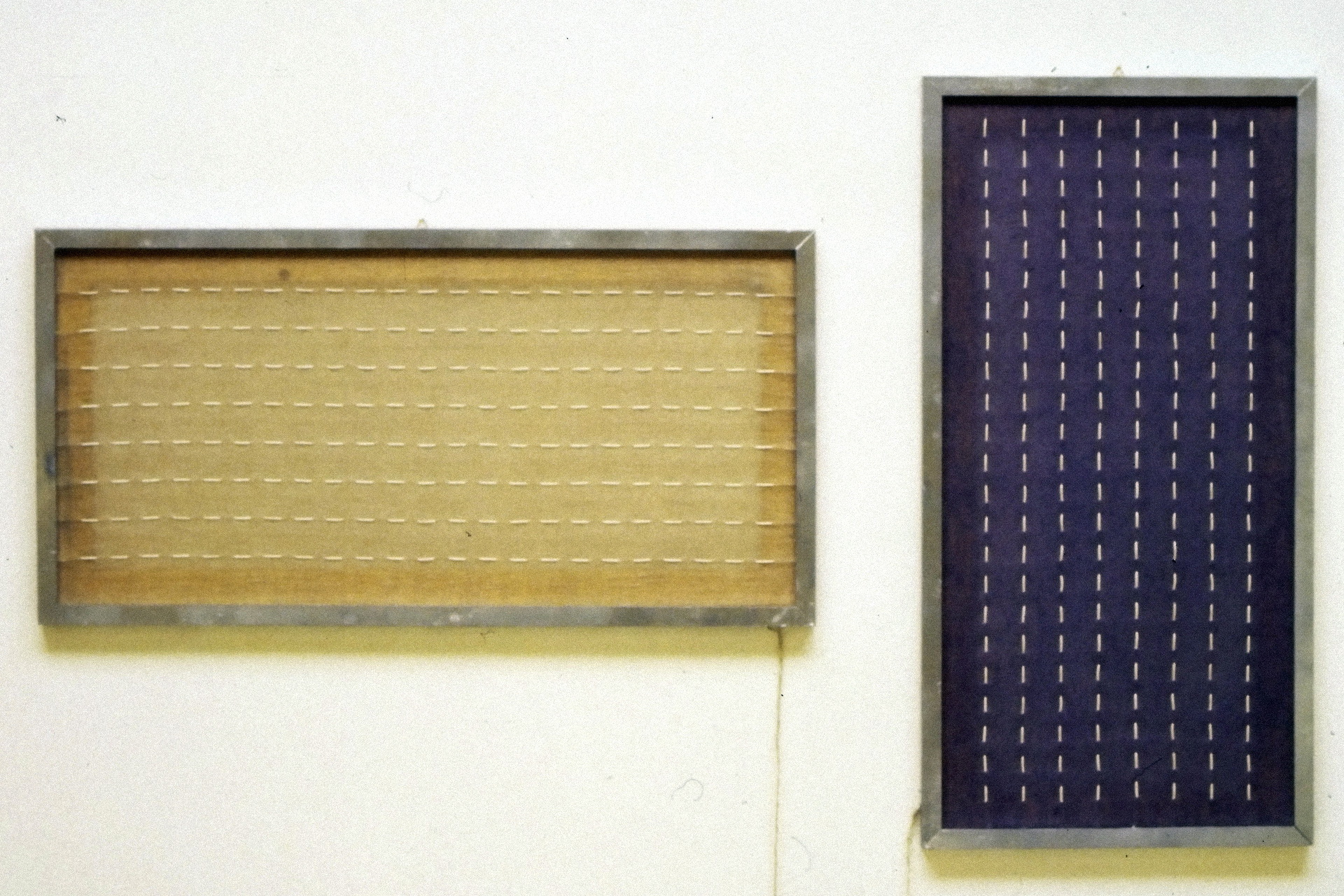
HEATING PAINTINGS
Project: Marika Hasuike (Italy)
Thermoelectric fabric panels for domestic spaces, usable as wall panels or room dividers. Decorative and functional elements that warm the environment. Made with aluminum frames and wooden supports covered in natural fiber fabrics such as linen, paired with insulated resistors. A micro-thermostat sets the temperature threshold to ensure safety. Powered via low-voltage electrical transformer.
Materials: Aluminum, wooden frames, natural fiber fabrics, and PVC-insulated electric resistors
Size: 52 x 102 cm
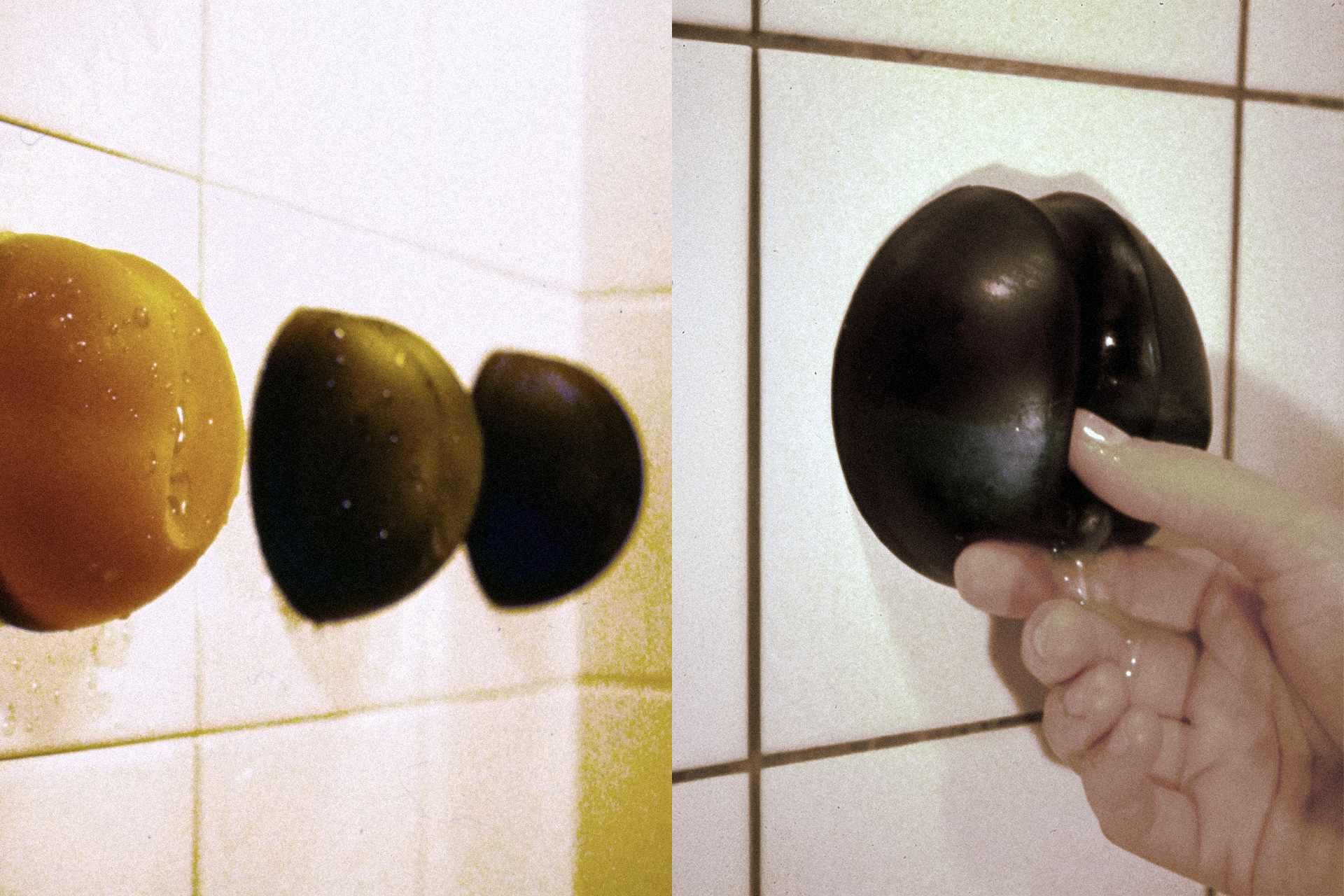
SOAP DISPENSER
Karin Krautgartner (Austria)
Liquid soap or shampoo dispenser for shower use. Suction-mounted on tile or glass, adjustable to a convenient height.
Materials: Polyurethane
Size: Diameter 96 mm
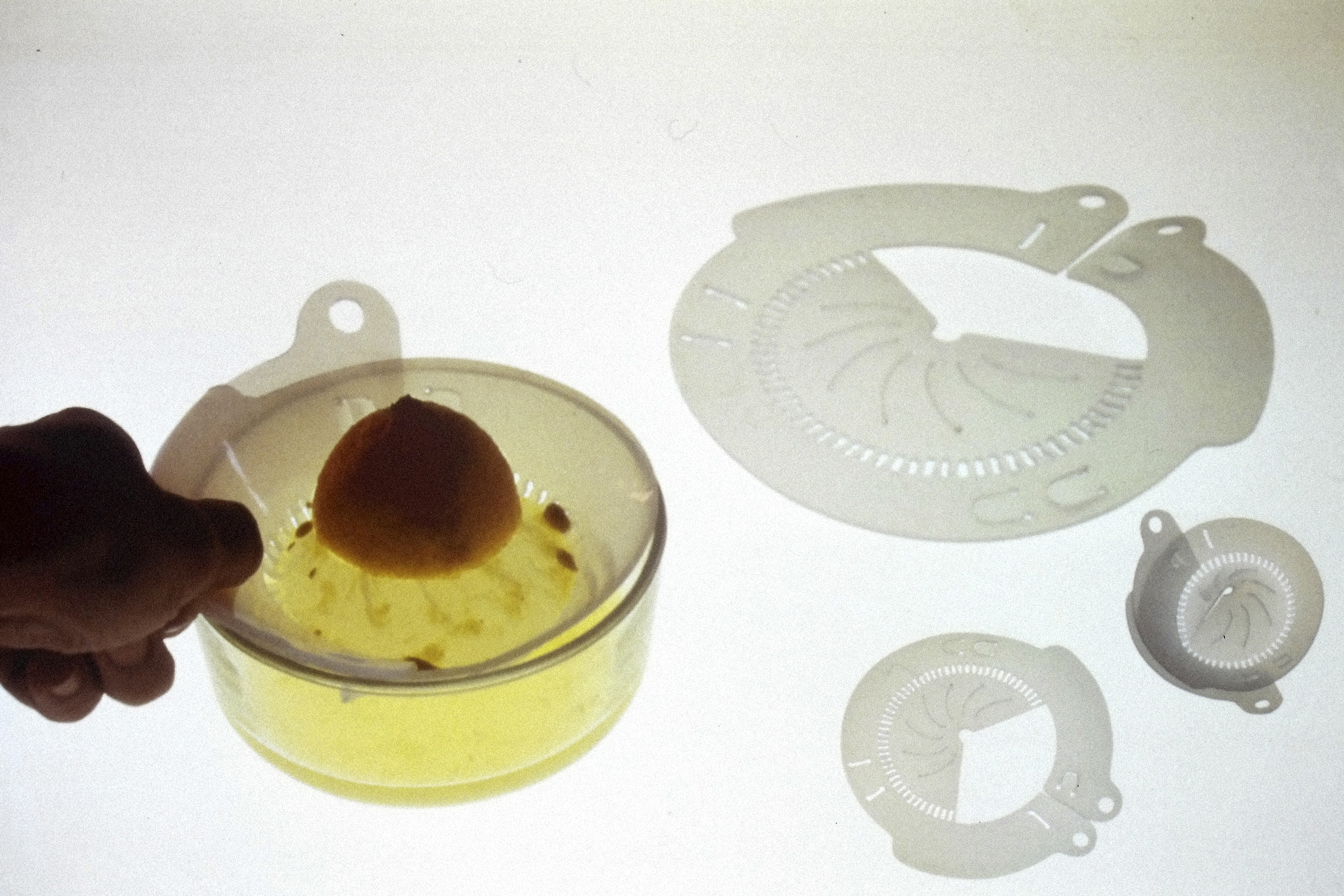
LEMON SQUEEZER
Project: Donata Paruccini (Italy)
Citrus squeezer made from a single die-cut sheet of low-density polyethylene. Can be stored flat and assembled into a 3D shape for use. When in 3D form, the semicircular central cuts lift by forcing the conical shape, creating friction with the fruit pulp.
Materials: Polyethylene
Size: Diameter 19 cm x 3 mm thickness
THERE’S A PARTY
Dario Perego (Italy)
Plate-tray for parties made of recyclable, injection-molded food-grade plastic, approximately 1 mm thick. Its unique shape ensures rigidity and stackability. The tray has two holes for holding cups and napkins, offering better stability and freedom of movement.
Materials: Food-grade plastic
Size: 31 x 18 x 4 cm
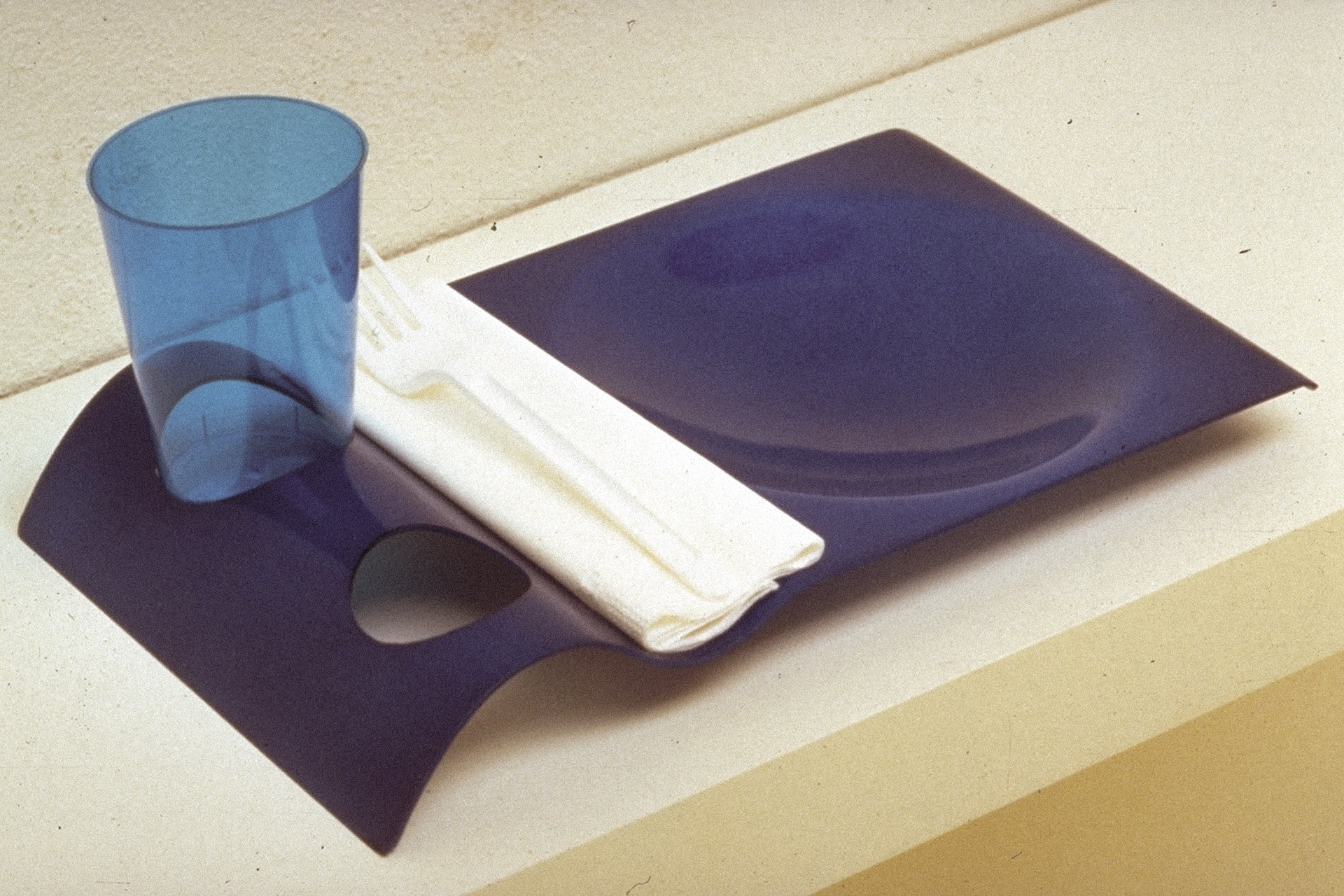
GHOST
Fulvio Rostagno (Italy)
Reversible rain cover for briefcases, folds into its internal pocket.
Materials: Waterproof material
Size: 64 x 62 cm

CENTERPIECE
Martin Ruiz de Azua (Spain)
Centerpiece.
Materials: Ceramic
Size: Diameter 36 cm

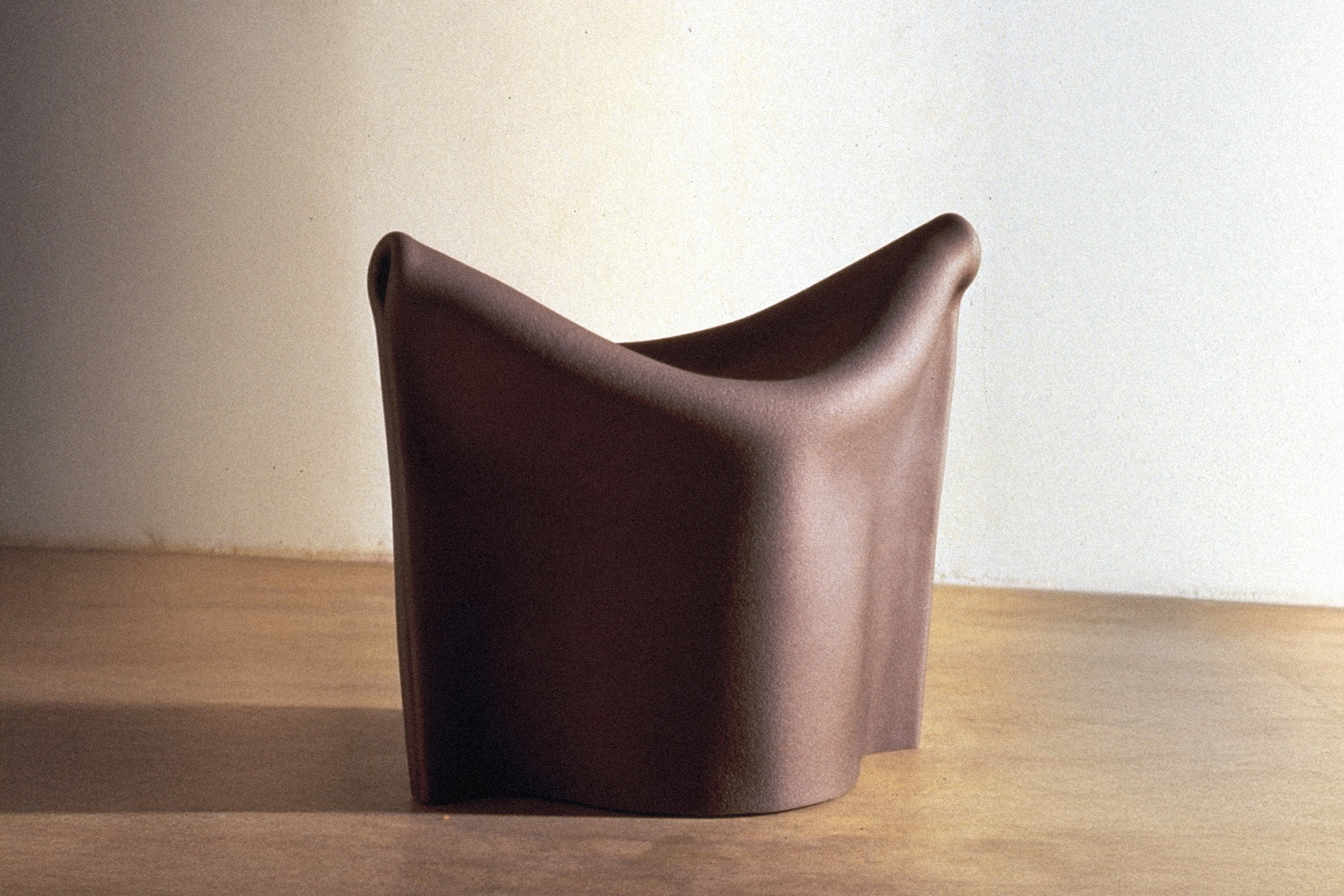
PUPA
Fabio Santamaria
Monomaterial stool made from a single thermoformed and heat-sealed sheet.
Materials: Expanded polyethylene foam
Size: 64 x 74 cm
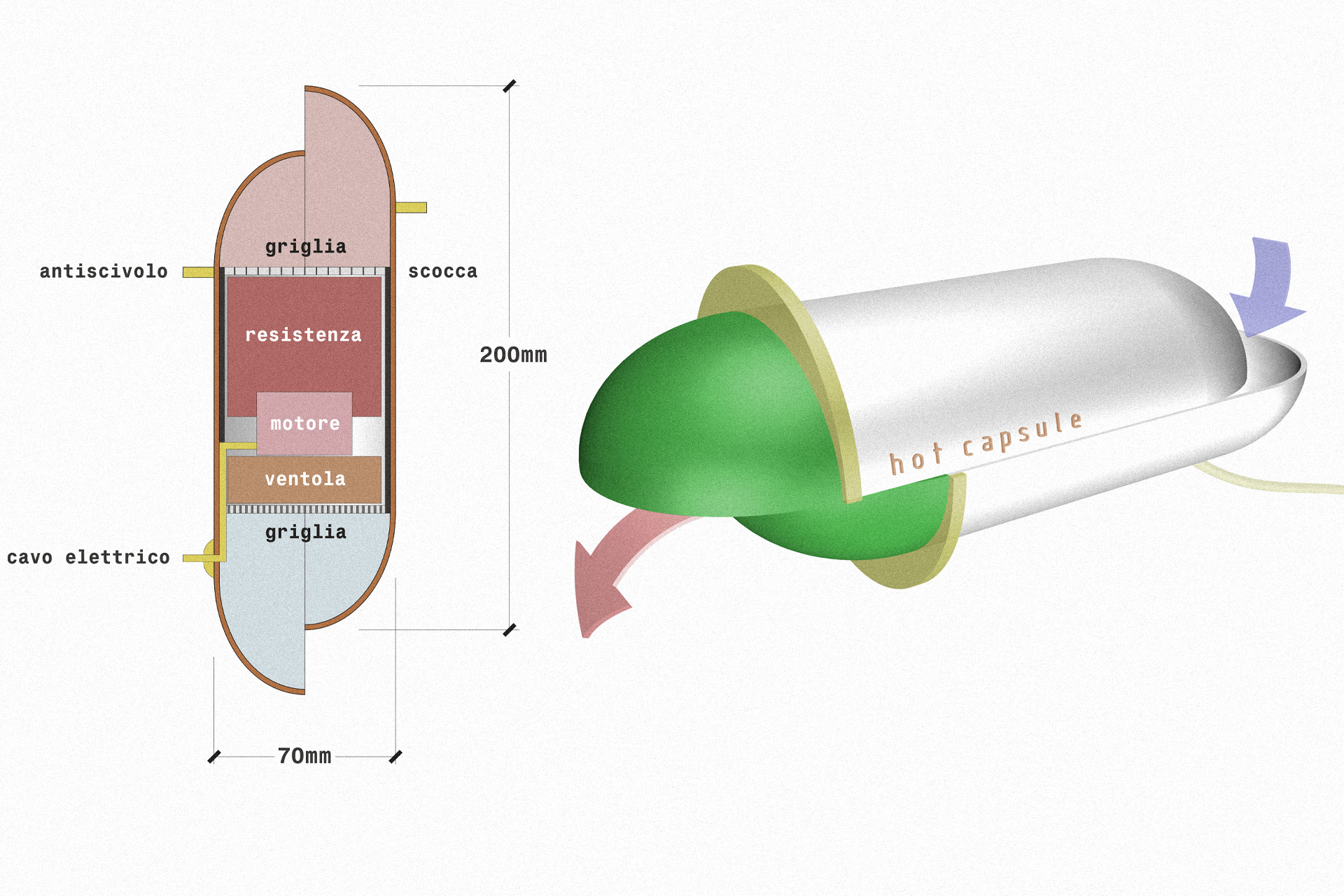
HOT DOG
Hiroshi Sasagawa (Japan)
Travel hairdryer with a cylindrical, two-part sliding body. Equipped with a rechargeable 1200 W battery. It turns on by sliding the top shell forward. Can be operated with one hand.
Materials: ABS and polycarbonate
Size: 20 x 7.8 x 7 cm
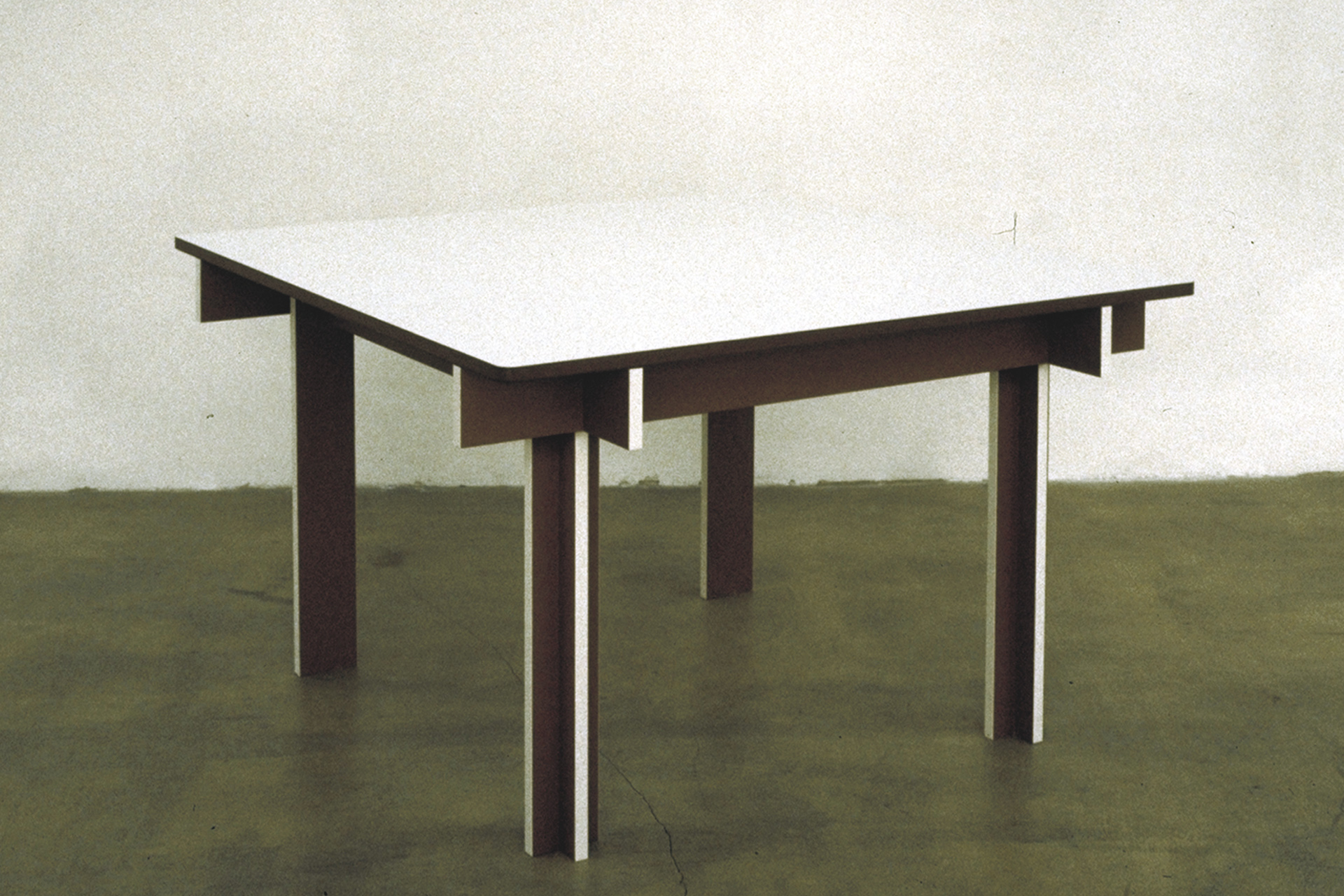
FLAT TABLE
Pietro Silva (Italy)
The “flat” table consists of an interlocking wooden structure that can be assembled/disassembled without tools. All components (top, legs, and braces) are cut from the MDF or plywood panel. Legs and braces are later milled for interlocks. When disassembled, it takes up very little space, making it easy to transport and ship.
Materials: MDF (Medium-density fiberboard)
Size: 126 x 126 x 75 cm
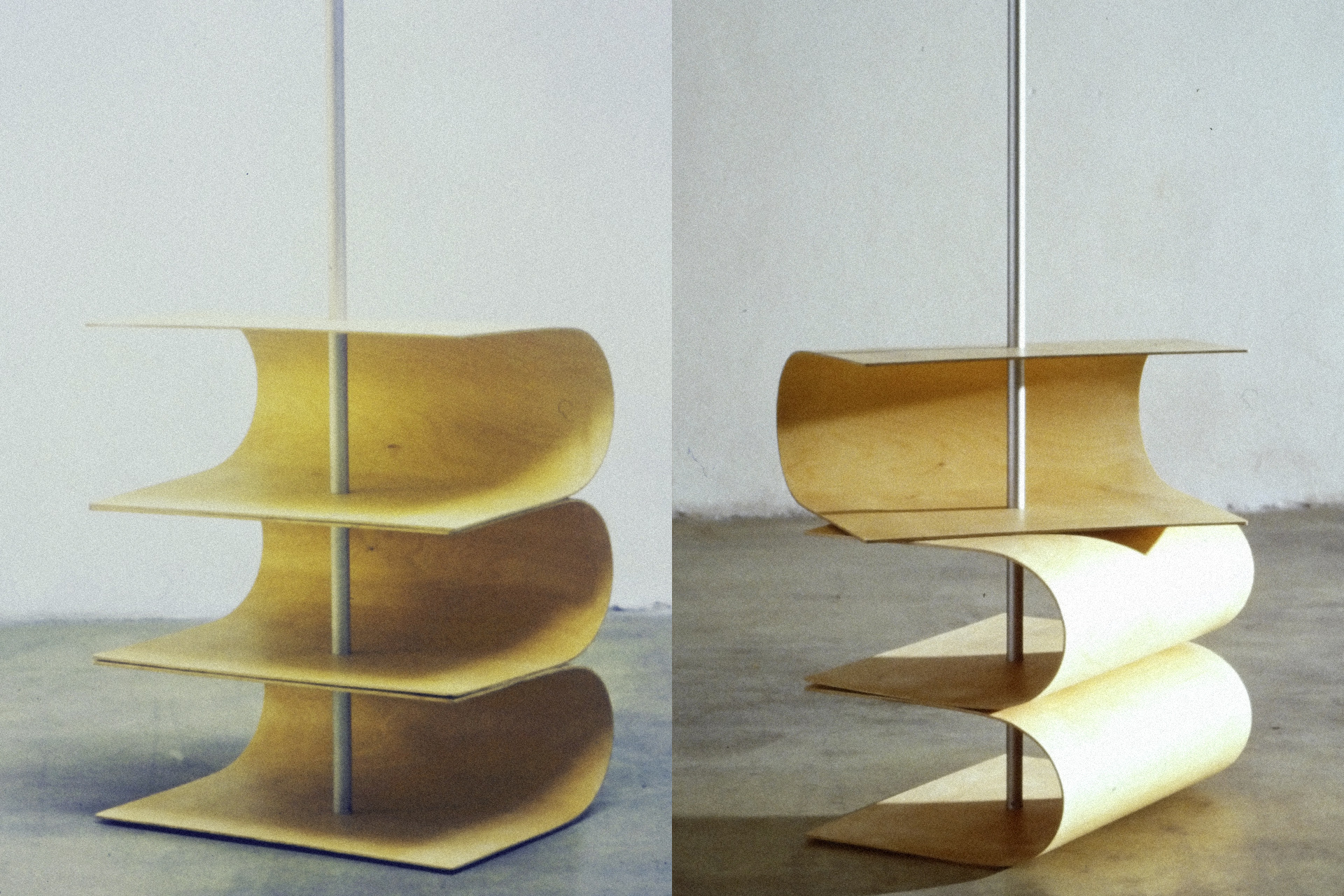
LA VOILE
Angela van Worden (Netherlands)
Modular container made of three plywood elements held together by an aluminum rod, for storing frequently used clothes and objects. Easy to assemble and lean against a wall.
Materials: Plywood and aluminum
Size: 110 x 50 x 38 cm
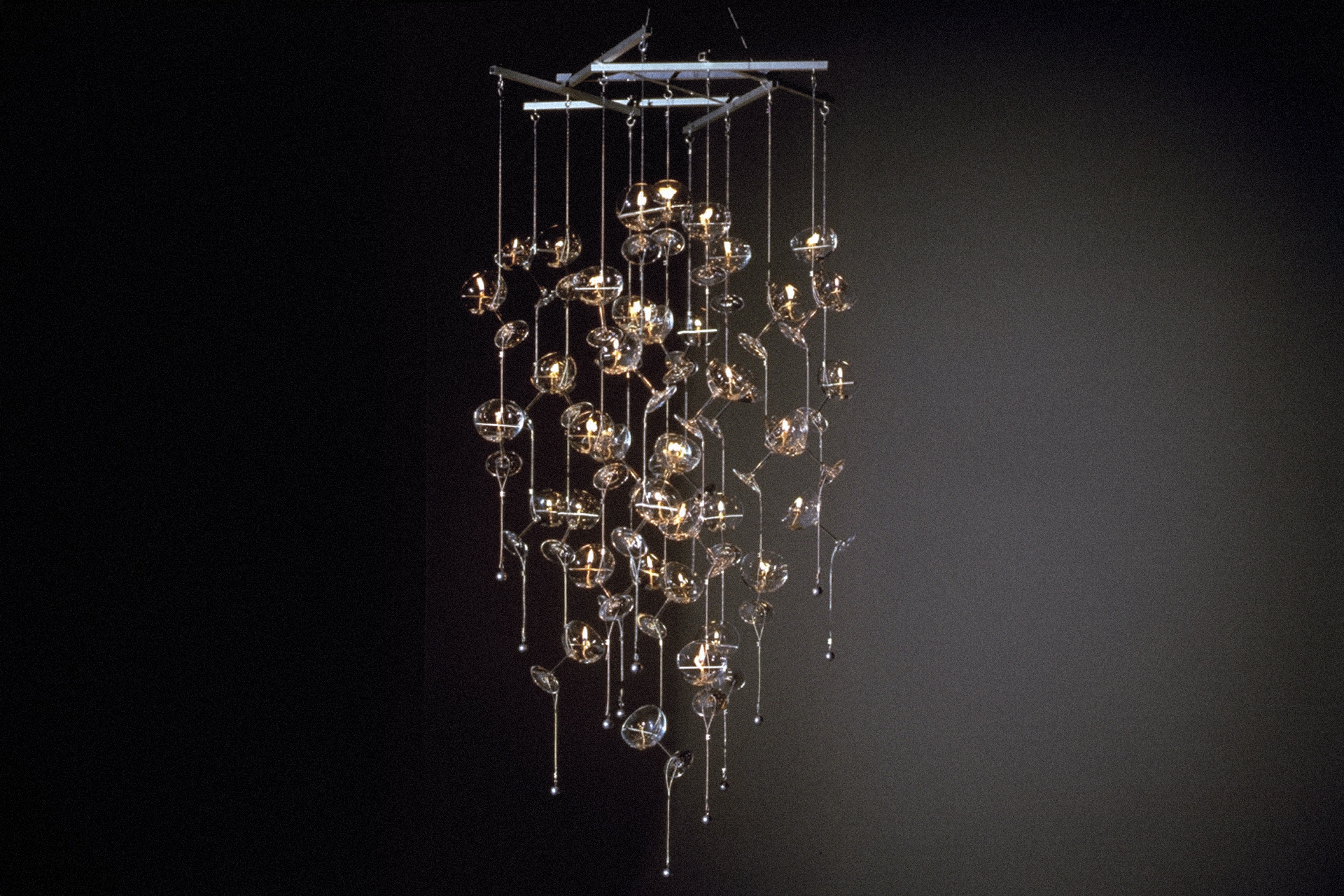
ROCCAPENDICE
Massimo Varetto (Italy)
Suspended chandelier.
Materials: Champagne cups and aluminum
Size: 145 x 70 cm
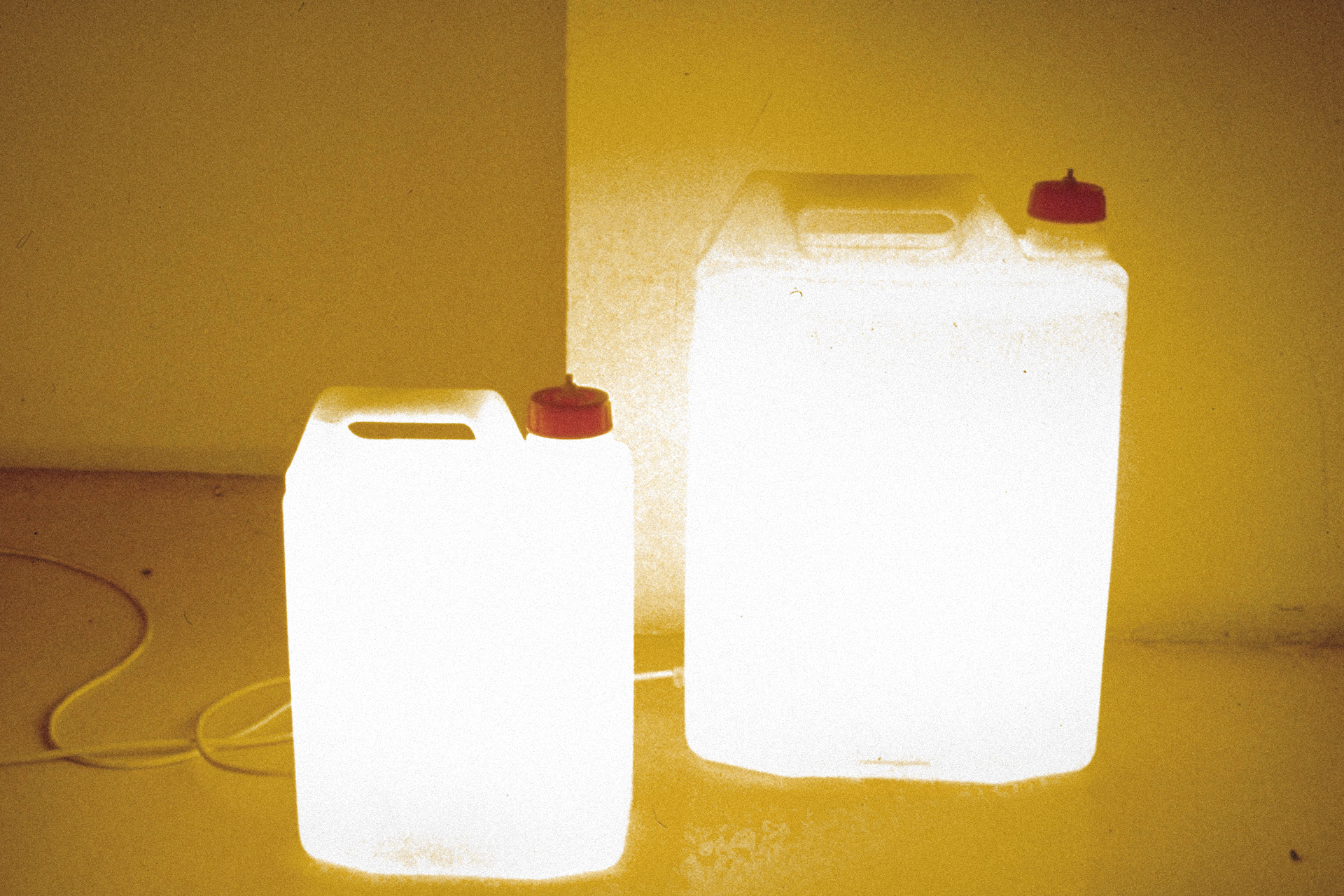
TANICA
Massimo Varetto (Italy)
Floor lamp.
Materials: Champagne cups and aluminum