Contest and exhibition: NEW AGRIculture - Milan Design Week 2004
13 - 19 April 2004
The title of the theme-based exhibition that OPOS organised in 2004 was NEW AGRIculture.
New agriculture in the sense of trying to recreate the relationship that exists between people and the natural terrain, with its activities, its rhythms, its things and its appearance.
A new sensibility has contaminated the entire western world and is particularly evident in Europe, the vast, historic expanse where the city-countryside dichotomy was hit by crisis quite some time ago.
The traditional space of agriculture, the natural space that once surrounded the city, has become a sort of new existential, productive and aesthetic reticulum (to get an initial aesthetic suggestion, just take a look at Andrea Branzi’s Agronica project back in the early 1990s).
More and more often, places, professions, cultures and lifestyles that used to be a part of this agricultural world are being undermined by a strong thrust of change.
The theme of the exhibition is precisely that of trying to analyse how this change is unfolding and come up with a design project that involves new scenarios and new products (is this, perhaps, the role of the potential search for design?).
Life is full of these new changing signs: as consumers we are submersed by a constant change in the agricultural products that we consume. “Typical”, “slow”, “biological”, “fair and united”, “genetically modified” are all categories within agroindustrial production but they are also new existential categories of a lifestyle.
This new agriculture reality also creates new personalities like the “food enthusiast” or the “agri-tourist” and they are accompanied by new ways of discovering the land and its products.
It is the very land, the “terroir”, that is the frontier for new crossings aided by powerful service and communication tools (brands from local producers, oil and wine for example, promotional fairs, associations such as Slow Food) and characterised by new production logics (a search for quality and product personalisation).
In contrast with this advanced trend is yet another very different one that deals with agribusiness or rather the vast exploitation of the farm land, mass- and industrialised-production, often controlled by big, multinational groups that impose ways of agriculturally exploiting the land which impoverish local communities and change (often irreversibly) the landscape (see the United Nations website).
It’s a complex matter: in reality, the dynamic of demographic growth also leads us to consider the need to step up production or at least handle it better (in a less speculative and commercial way that is closer to people’ real needs).
So, we could consider two opposing situations as the basis for the project: one, the improved countryside, aesthetically designed and ‘Tuscanised’ as is typical of many Western countries and, two, the model of an overexploited, super-productive countryside that can still be found in a number of western countries and which, indiscriminately, is making headway in developing countries, destroying culture, skills and biodiversity.
The intervention of design should encourage the creation and diffusion of projects which, in turn, encourage (on a varying scale, from products, to the system, technology and both the communicative and conceptual dimension) a critical view of agriculture and the land.
Not only from the point of view of creating sustainable economic development but also that of determining a look, a landscape, a way of doing things as well as innovative and conscious products.
The hope is that people will start to reflect: if the land becomes a commodity why not really try to change it through a design project? Why not tackle (and do away with) any cultural and aesthetic stereotypes there may be that are suffocating our perception of the agroindustry?
OPOS believes that this theme is absolutely essential when trying to imagine a future model based on human and natural development. In doing so, it is once again demonstrating both its attention to issues that have a strong social and cultural impact and its conceptual and visual design approach .
Here is a list of the possible themes that OPOS suggested as the aims of a possible project.
1) a living space in the country that could also define a continuous form of settlement in the countryside, extending the theme of a single living space to the dimension of the landscape as far as the idea of “producing in the countryside”.
2) biotech as a source of new, products, packaging, shapes… and new possibilities for materials.
3) the tools-utensils for new agriculture could also be a new cultural form. They could also design, ironically, a pop-art spade (why not?)… in the same way that items of clothing a/o personal effects for new agriculture could be designed.
4) the communication/display of agricultural products meant as both food products and the way in which the new agriculture presents itself in all the various forms/ways (distribution sectors on a communication, packaging, display and merchandising level)…
5) navigation kits or rather service and guidance systems for the new agricultural land: for example a kit for the “food enthusiast” or the “agri-tourist”…. theme-based maps, tools for tasting-trying-enjoying, as well as totem poles, communication and electronic devices.
6) the new commuters and everything they use, touch, eat and transport…
7) the city farm or rather, “the old farm” in the city, with the idea of cultivating in-house or in the form of urban vegetable patches, be they planned or spontaneous, with their didactic, recreational and aggregative functions.
8) sensory transpositions such as bringing the feelings of sight, smell, hearing and touch… from the country into the city.
9) contemporary festivals, as the theme of the project would suggest, with the organisation of grape harvesting events, festivals, fetes and festivities.
10) turning agricultural processes, harvesting, irrigation, cleaning, field preparation,… into temporary events, games, didactics and new forms of co-production.
The event was held in the OPOS Gallery Corso Garibaldi 104.
ISACCO
99IC
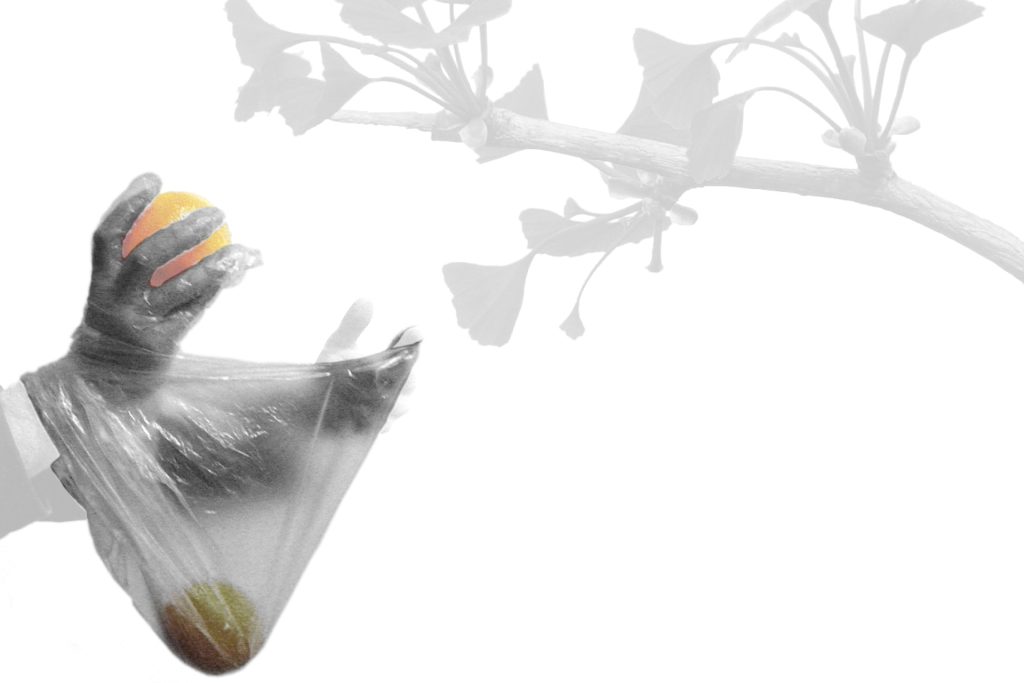
A glove-bag for picking up farm produce. Designed to make even those people who only ever see fruit at the supermarket feel at home. The pack comes complete with a roll of 100 bags and fixing brackets for putting the roll-holder up. To be positioned in busy strategic points so that your farm produce basically sells itself.
size: 100 bags, approx. 20 approx. litres
* made out of biodegradable materials.
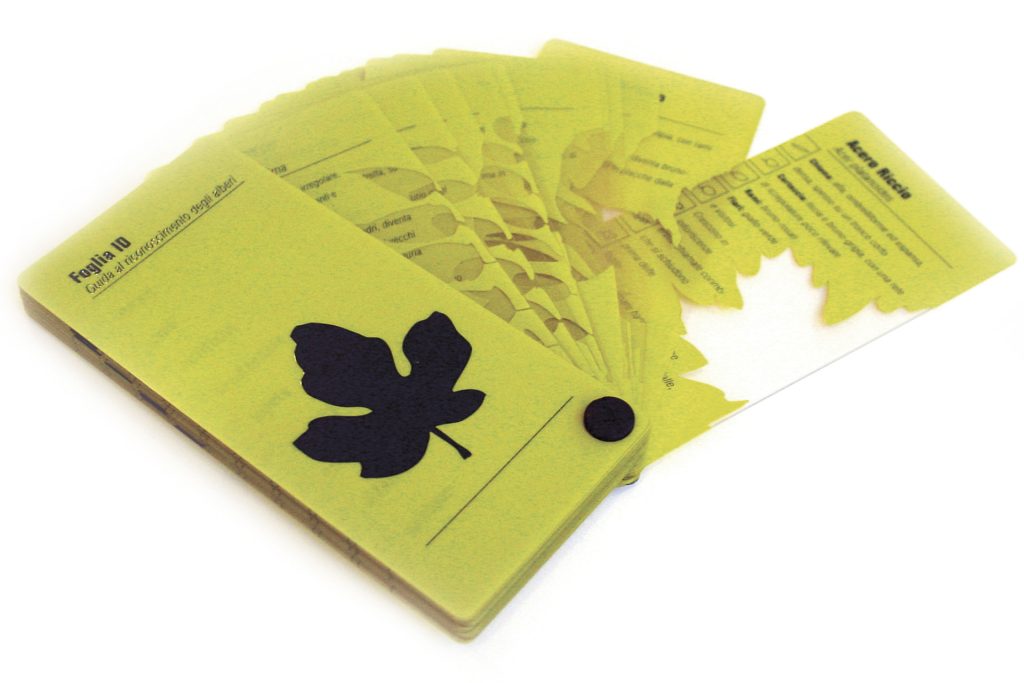
GUIDE FOR TREE IDENTIFICATION
ANDREA MEREGALLI AND MADDALENA MERLO
A tool.
By making simple comparisons, it is possible to gain experience, find things out and learn whilst doing things.
The information will be read later, only after having seen, searched, picked, compared, recognised and, finally, identified.
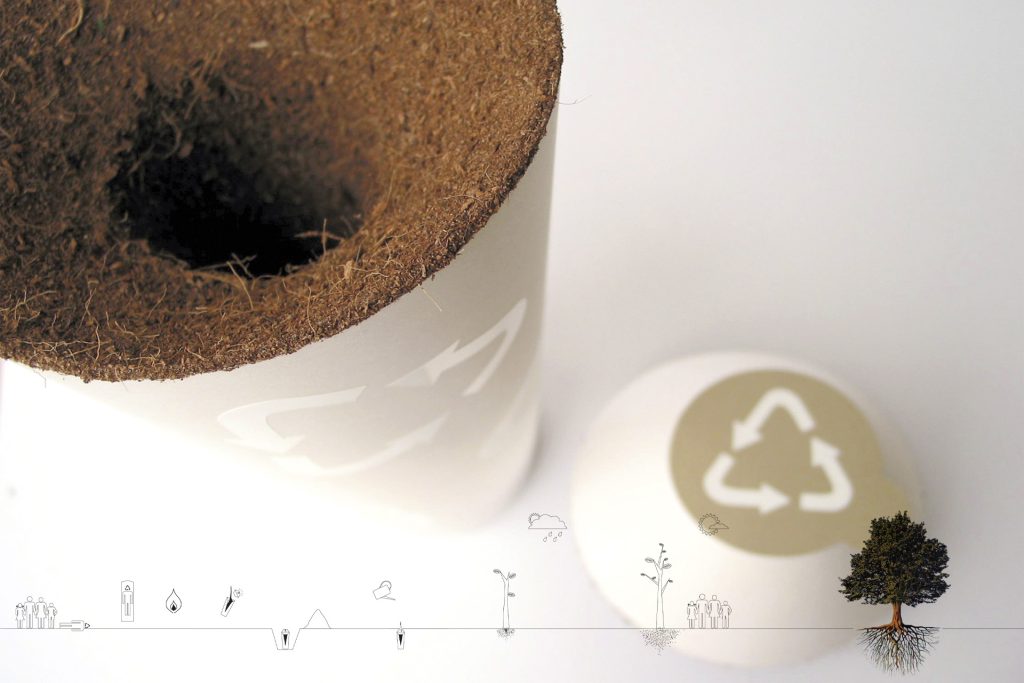
BIO-URN
MARTÍN AZÚA E GERARD MOLINÉ
Bio-Urn is an urn for ashes, which transforms the ritual of death into an act of regeneration and life. It is made out of compacted organic material and covered with a layer of cellulose containing organic fertiliser. There is a seed in the lid which will later germinate and give life to a new tree. Thanks to the Bio-Urn, cemeteries will be transformed into forests full of new life forms. When our lives are over, Bio-Urn allows us an act of reconciliation with nature itself.
AGRICROSSING
AZZIMONTI + PIGEM DESIGN STUDIO
From the emotional levers of “book-crossing” comes “agri-crossing”, an object that gives you the chance to take possession of the landscape, take it with you, personally take part in its creation and survival, share it with others and hand it down to future generations. Using a seed to “release” and bring other people’s landscapes into our own, to “capture”, from places that have an effect on us, their intimate essence and make it ours or pass it on to others, not only through words but also as a sound experience, swathing images, sensations and the culture of the landscape in time, recognising in nature the source for all vital inspiration…
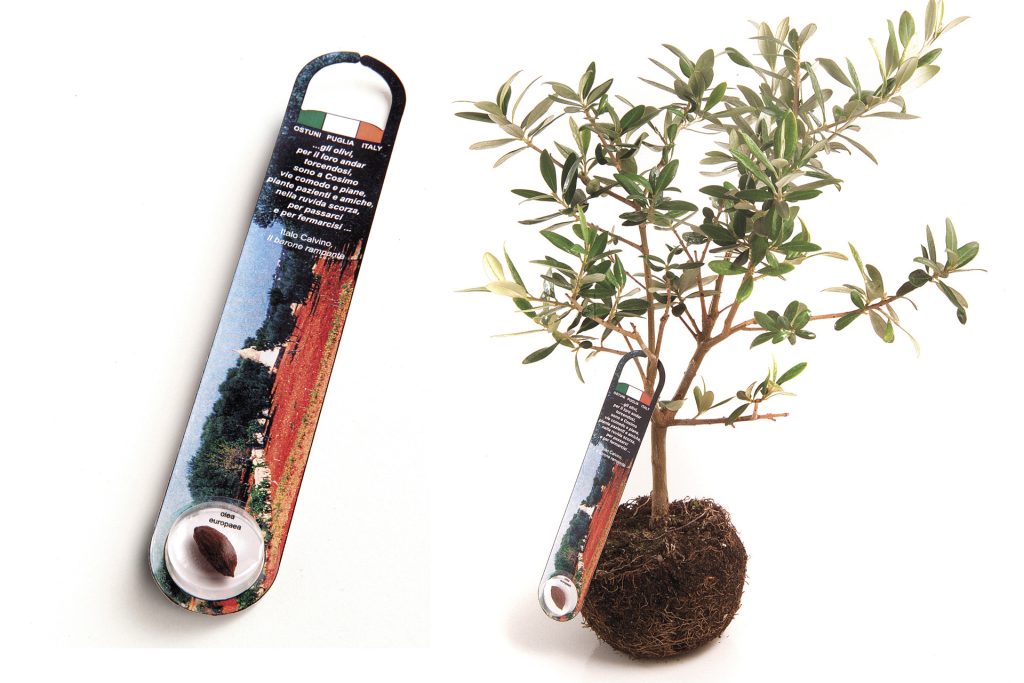
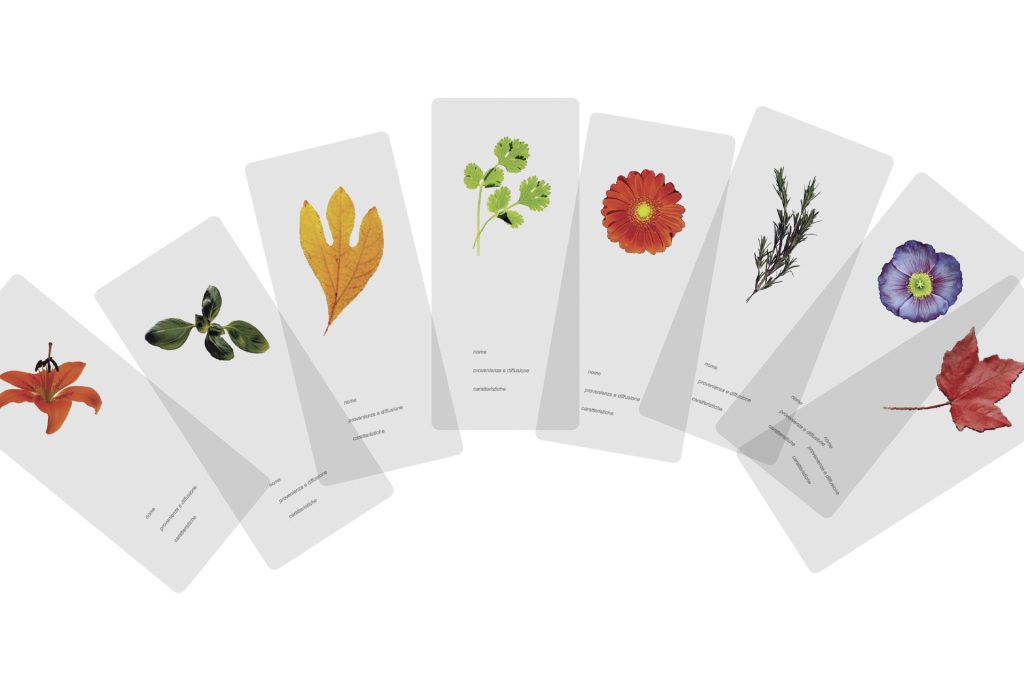
LANDMARK: PLASTICIZED BOTANICAL ESSENCES
WALTER BECCHELLI
Like a fossil, protected against the wear and tear of both time and memory.
Small, botanical testimonies that constantly regale us with sights and smells whilst reminding us of just how delicate the equilibrium between ourselves and the rest of the world really is.
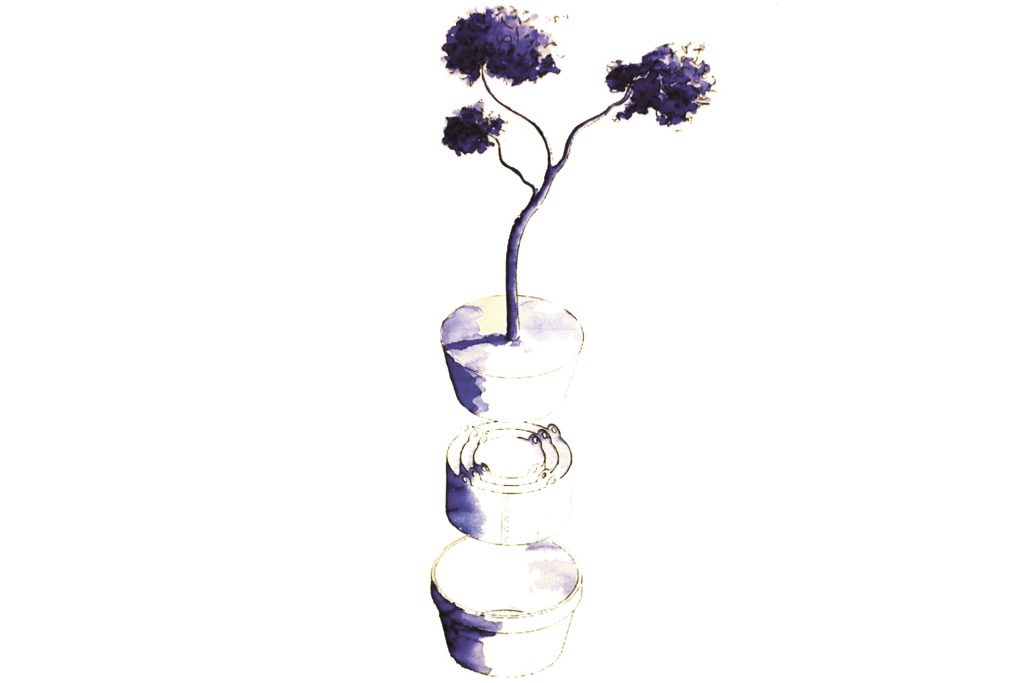
SOLOACQUA
WALTER BECCHELLI
Accessory for controlling the growth of house plants. Waterproof polycarbonate strips, cut into different lengths and wrapped around rings in the pot, stop the roots from spreading outwards.
Later on, simply remove the bottom ring to enable the roots to grow to the one above.
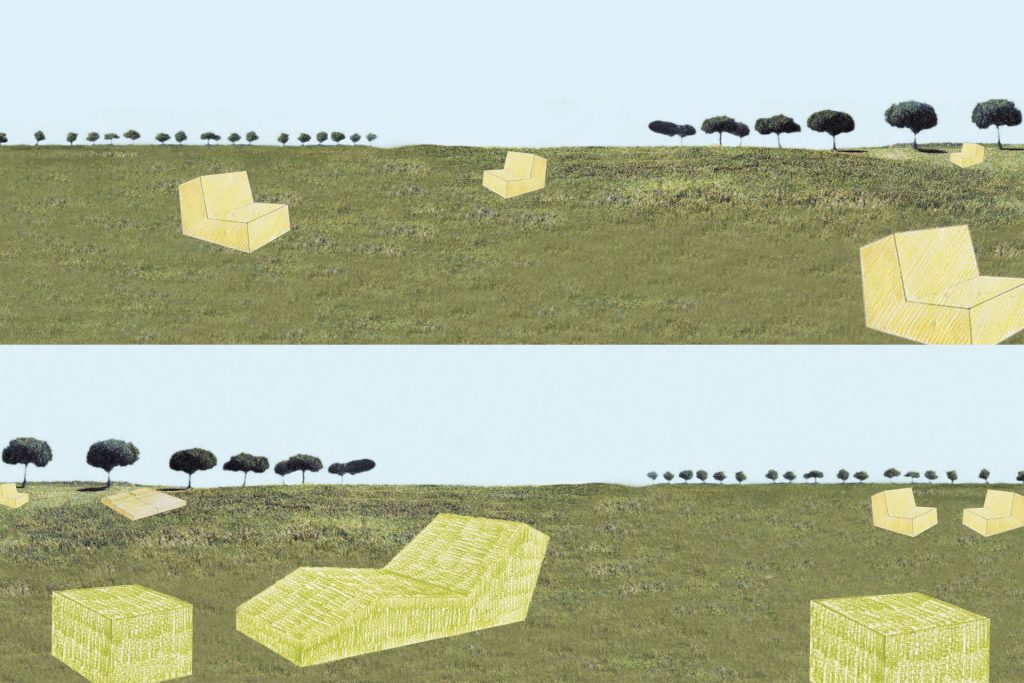
FURNISCHING THE COUNTRYSIDE
FABIO BORTOLANI WITH ALESSANDRO MARRI AND ALESSIA SERAFINI
Designers shouldn’t just deal with urban spaces, but rural areas too.
Coming up with new scenarios, new landscapes.
Hay bailed in cylindrical or parallelepipedon shapes, dotted around the countryside, so changing the landscape. A powerful sign.
Giving new shapes to hay bales and populating the rural landscape with new presences, temporary furnishings (chairs, beds, chaise-longue etc.).
A new way of programming baling-machines, would, using an industrial process, give rise to new shapes, free from the simple logics of accumulation.
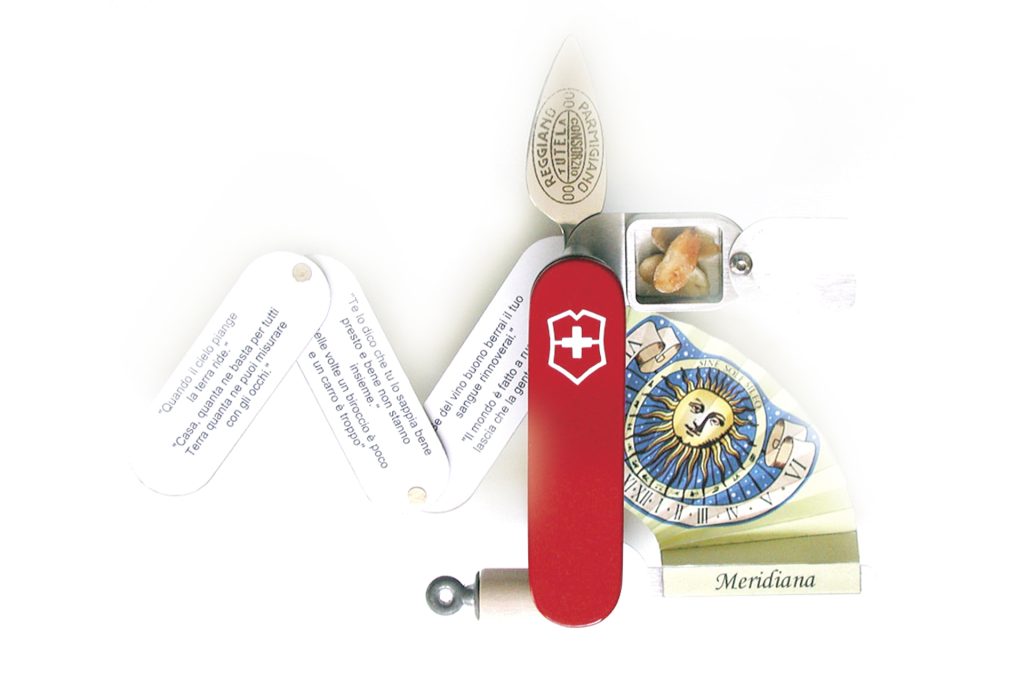
KIT NEW AGRIculture
CARLO CONTIN
An object designed for today’s new “commuters” heading from the city into the country.
This set of tools and accessories, similar to the classic Swiss Army Knife, the inseparable companion of many an explorer, is indispensable for life in the country.
A sort of “instructions for use” for city dwellers to help them get a better understanding of a world that is just so different from the one they are used to.
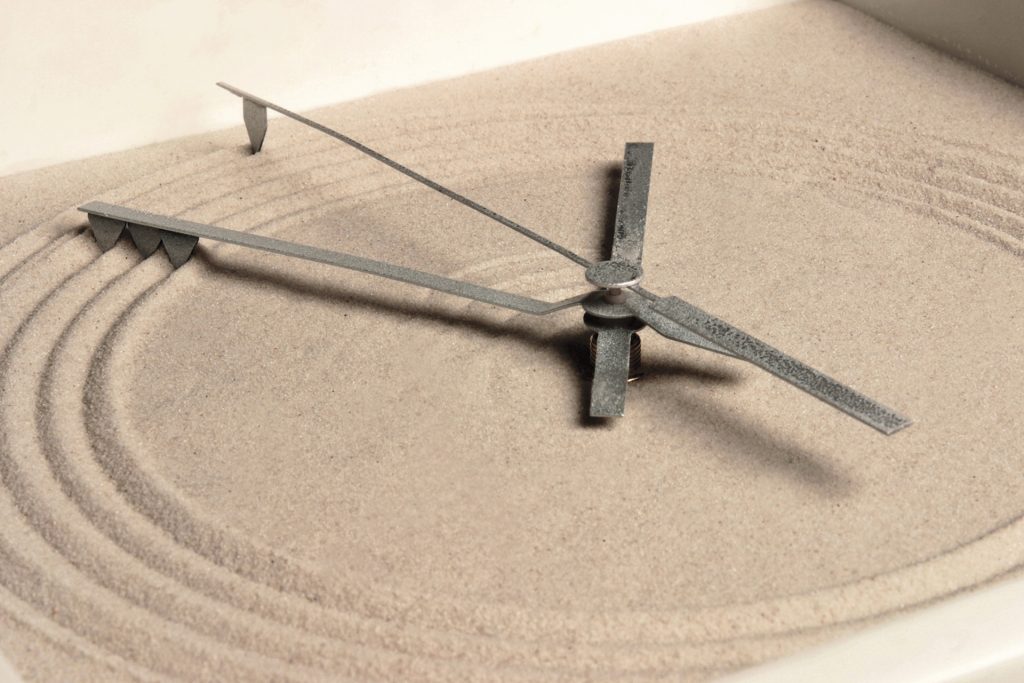
BIO O’clock
GIULIO IACCHETTI
A table clock with draggable hands and a sand-covered surface. There are no references to hours, minutes or seconds. The hands drag through the sand while turning, leaving a trace like a plough on the land. Another hand removes the traces. Time is not gauged analogically, but by comparing the work that has been done with what still needs doing.
Rediscovering a forgotten concept of time; the pace of the work done out in the fields determined by the sun and the changing seasons.
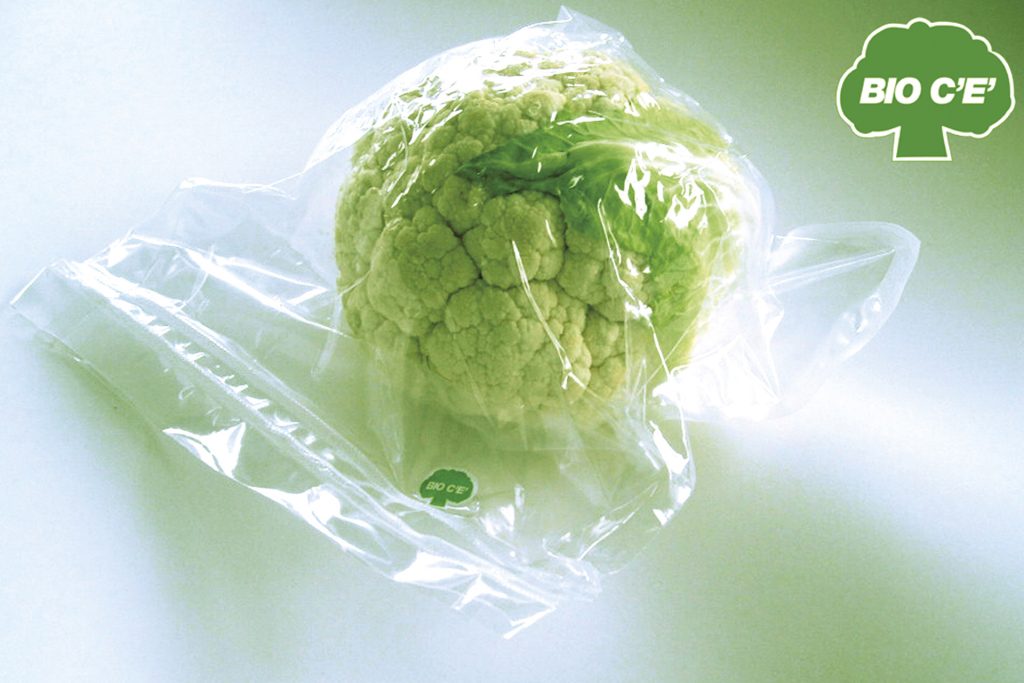
BIO C’È®
IM BAU DIS
A torment. A provocation. An illusion. An invocation, perhaps.
BIO C’E’® is a logo that defines, identifies and marks a range of objects, intentions and lifestyles. A biodegradable sticker, a clothing accessory, a symbolic furnishing accessory.
BIO C’E’® is a depressing, sarcastic and silent outcry. We could say that BIO C’E’ (BIO’S THERE) but you can’t see it, or BIO IS DEAD, to paraphrase a well-known song from the Swinging ‘60s. But that’s another story.
BIO C’E’®: for minds that are organically active and sufficiently ironic. And Milan is going to get blitzed!
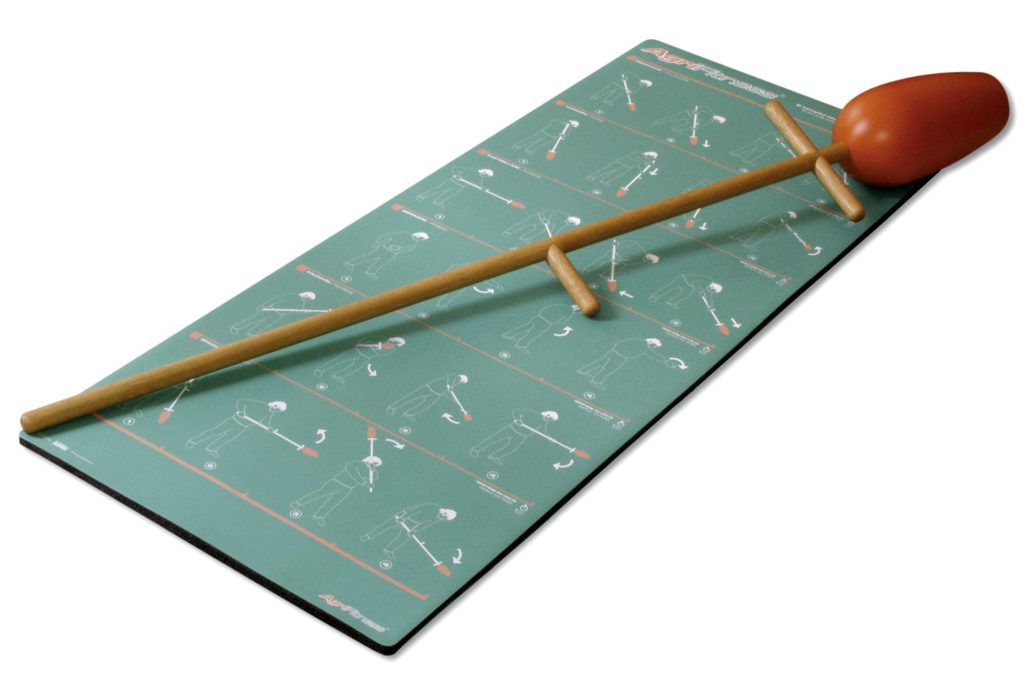
AGRIFITNESS
JOEVELLUTO
AgriFitness – 6 simple exercises to cultivate your body.
The agricultural techniques of the hard work done down on the farm have now become a new way of shaping the body and keeping fit, at home or at the gym. AgriFitness consists of a polyethylene foam mat (measuring 150 cm x 60 cm, with the exercises printed on it ) and a stick – the agristick – a metaphor of the main farming tools (spade, shovel, pitchfork, scythe etc.).
PERFECTWORLD | SEED’S BAGS
JOEVELLUTO
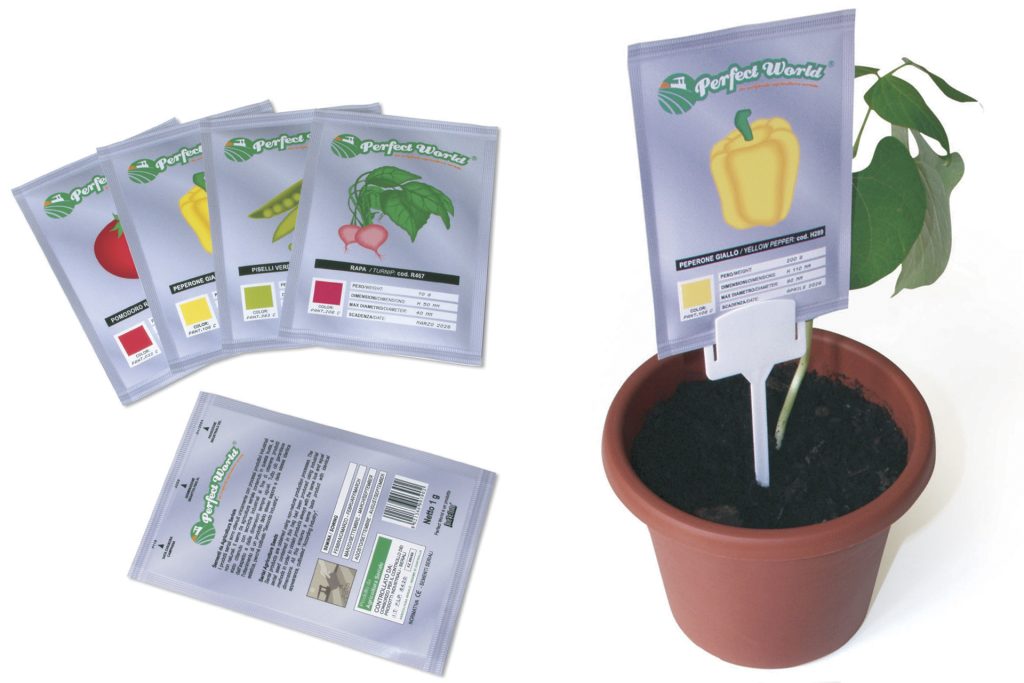
Parody of a possible future
PerfectWorld seeds – Serial Agriculture Seeds, are seeds that have been modified so that the products have the same look, colour, size and taste every time.
PerfectWorld serial products are obtained using non-natural industrial production processes only.
ANY FRUIT IN ITS SEASON
LEFTLOFT
What is new agriculture? And, above all, what is agriculture? What rhythms does it follow? What does urbanised man know about the origins of what he feeds on everyday?
Finding out about agricultural life so as to become more aware of what we consume. How?
With tools that are easy to use and which help us to find our way around this world that is just so overlooked and almost unknown to urbanised man.
“Every fruit has its own season” is a sort of analogical database, a double punched wheel, which, when rotated, clearly shows which fruits and vegetables are in season.

FANGO | SMALL BRICKS FOR MUD BUILDINGS
M+A+P DESIGNstudio
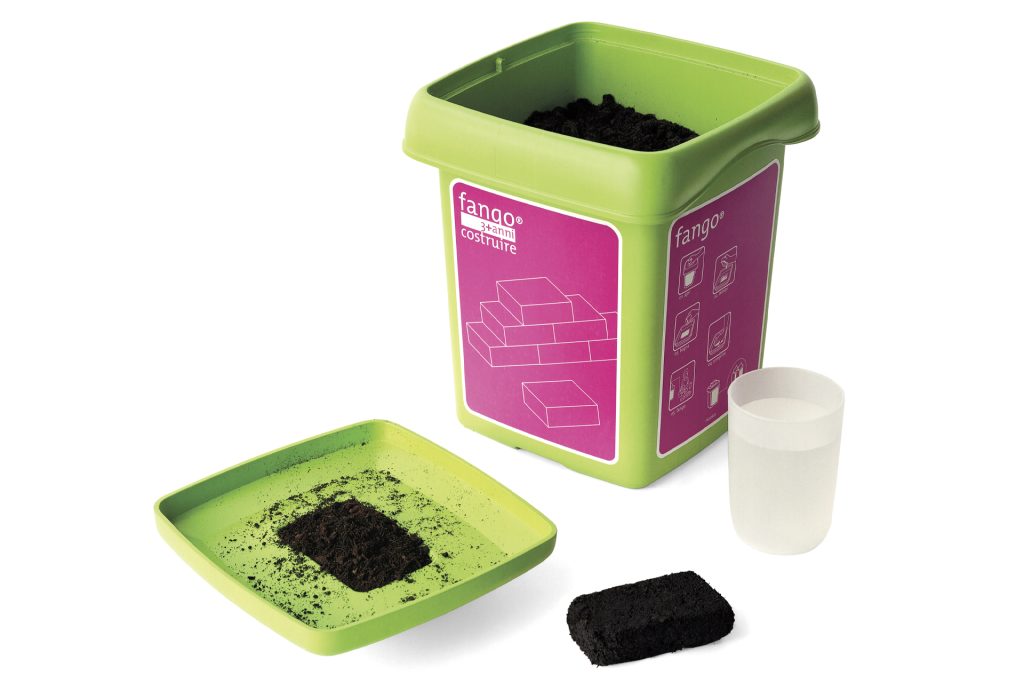
A “provocatively didactic” toy, designed for “city” kids who are not used to getting their hands dirty when playing on the parquet floor at home. Bringing the characteristic feelings of smell, sight and touch from the country into the city in a bucket full of… soil.
It gives kids the chance to make MUD bricks using the “lid-mould” and simply adding water.
When the soil runs out it can be “recharged” using the appropriate “refills” (plastic bags containing… soil). The idea is that you can “buy” simple “playing soil” whilst giving it that added value which is so often overlooked.
ACQUA E LUCE
DIANA EUGENI E ILARIA MARELLI WITH ARDA AKKAYA
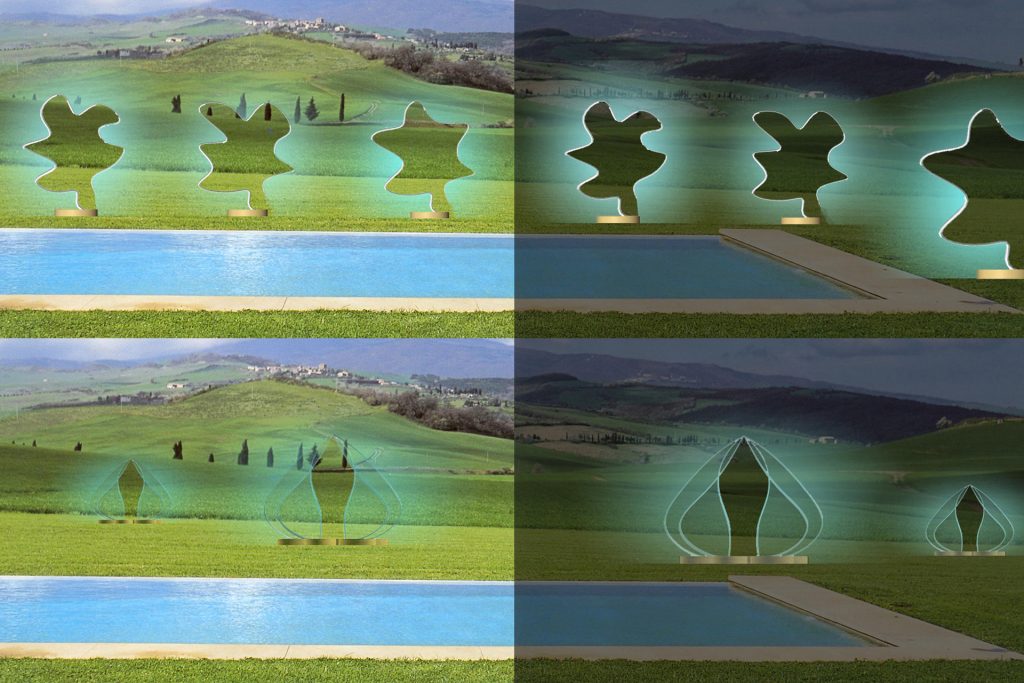
Water and light come together in this irrigation system, creating a luminous vegetation design on the landscape.
The magic of fountains, fireworks and artificial lighting systems, so typical of urban areas, transferred over to the agricultural landscape.
Water and light in motion, recreating the randomness of natural phenomena.
Not only modular and stackable, but both easy to transport and put up once on site.
AUTHOR SCARECROW
MONICA MOSCHINI
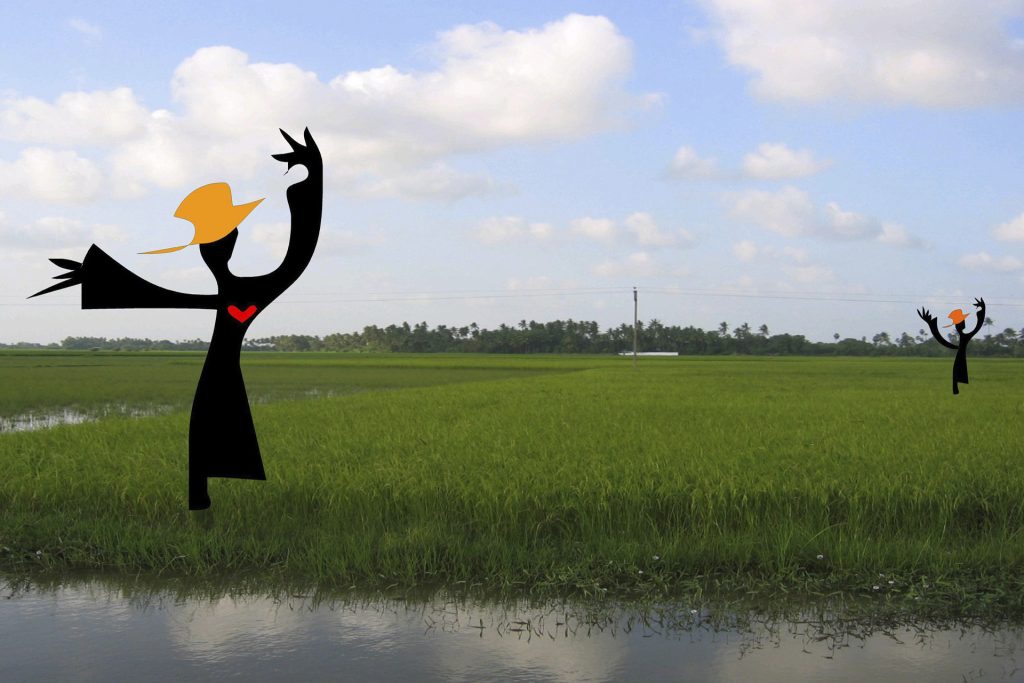
The designer scarecrow: from a functional and self-made object to a designer gadget used to promote the agricultural panorama. The project is an attempt at bringing the world of farm produce and artistic production together, with the aim of promoting their reciprocal products.
GERVASO
99IC
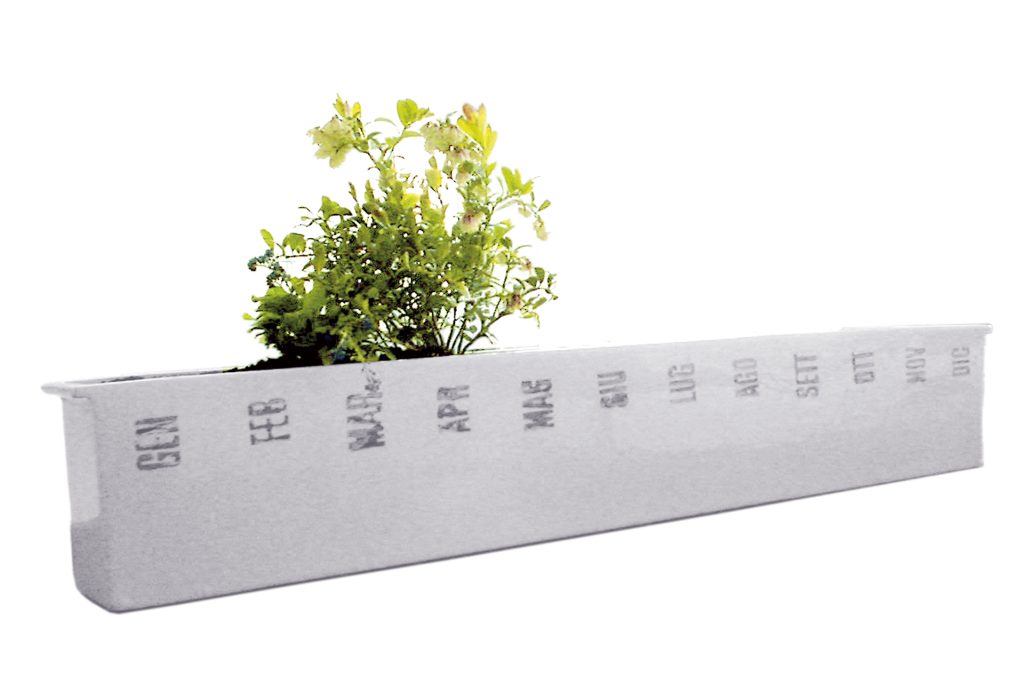
A natural organiser to crosslink everyday metropolitan tasks with the unsure world of nature. Twelve different plants for the twelve months of the year.
The pack comes complete with a pot, soil and botanical plants (not necessarily flowers) that are carefully timed. It is advisable to buy them at the beginning of the year. “Immediate-effect” pots are available on request. The pot is divided up into sections so that you can take care of different plants at the same time.
E-VASO
FRANCESCO ARGENTI AND DONATA PARRUCCINI
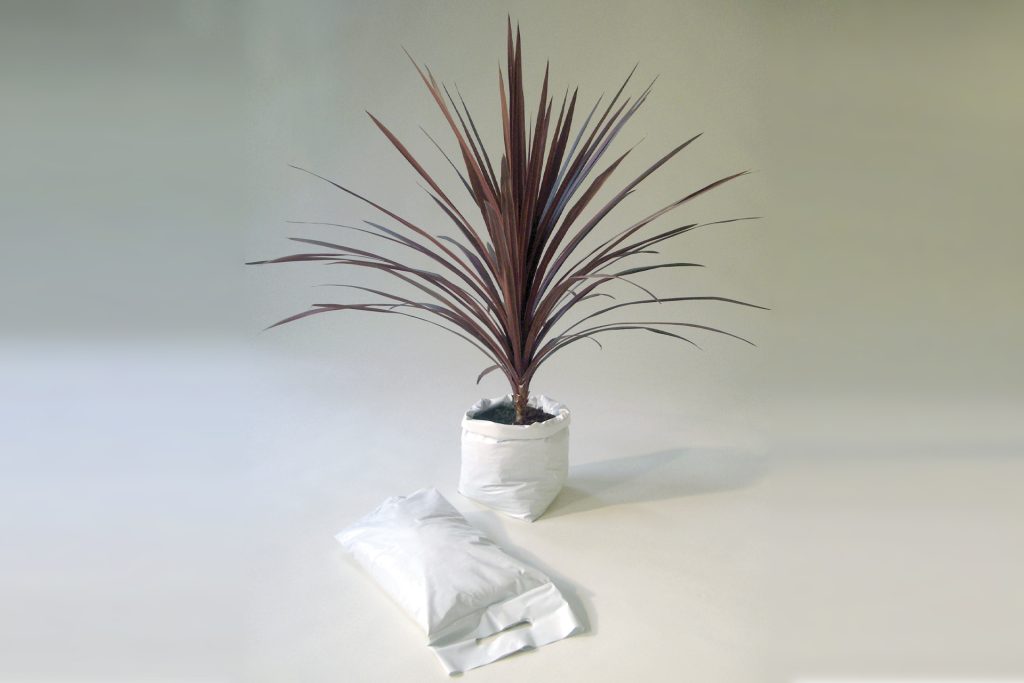
A bag of soil, an essential element, becomes a vase-container. Packaging becomes an object, simply by using a different way of sealing and folding the nylon. Once the upper edge has been cut and folded back as required, the vase-bag acquires stability. Made out of cheap plastic, it can be customised with decorative graphics.
BIOSTRIP | EVERYWHERE, EVERYTIME
MATTEO RAGNI CON ODOARDO FIORAVANTI
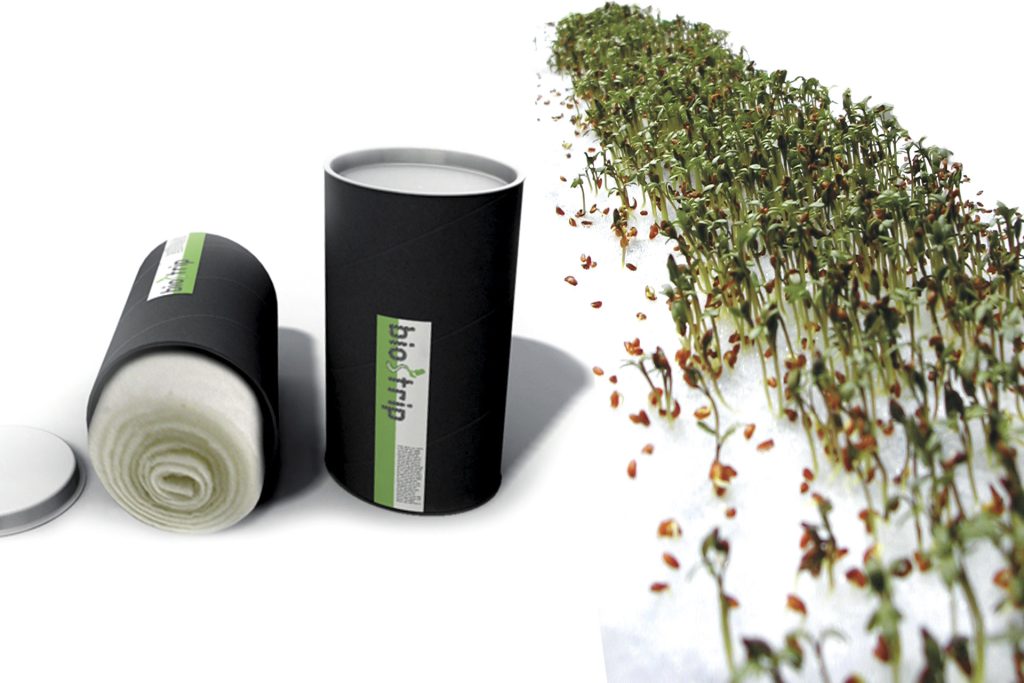
Mater-Bi mulching strips, with pre-inserted seeds, come in different sizes.
Day-to-day contact with nature, the satisfaction of seeing shoots grow in real time. Biostrip, for urban farmers, can easily be rolled out on the balcony or on the pavement outside your front door.
A private green space, a mini version of a metropolitan hanging garden.
NATURAL? OGM?
ROSA DESIGN: STEFANO COLOMBO, ALESSANDRO LAINATI, GIANMARIA SFORZA CON ANDREA LANZA
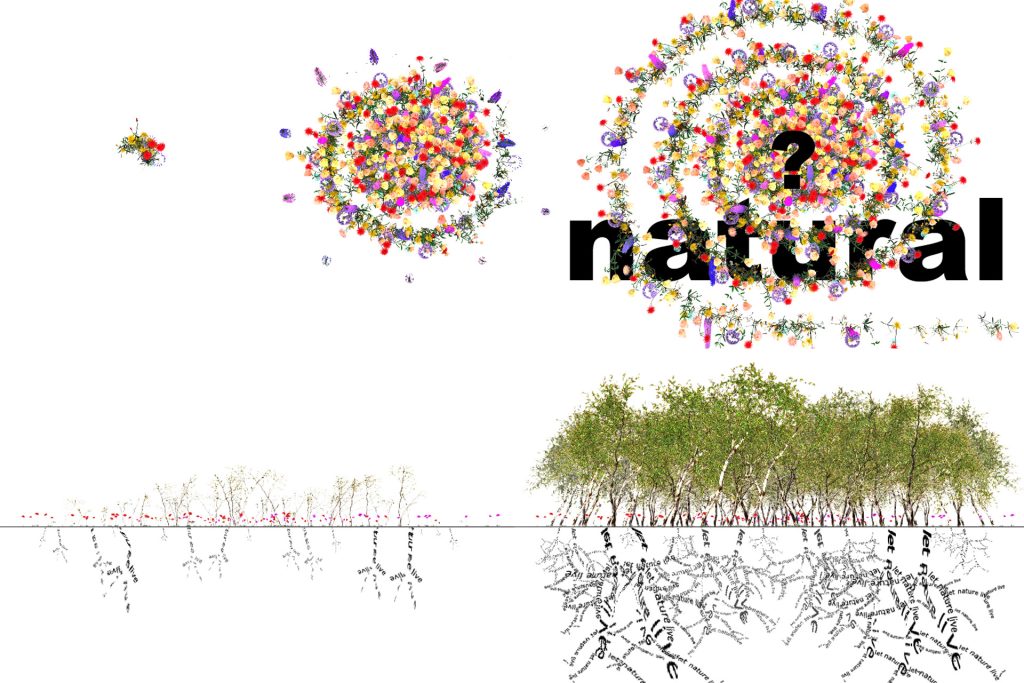
Series of short digital applications to communicate the landscape in a virtual environment, but above all to read critically the world that surrounds us, what we see, we think, we eat.
FLORETA
CARLO TREVISANI
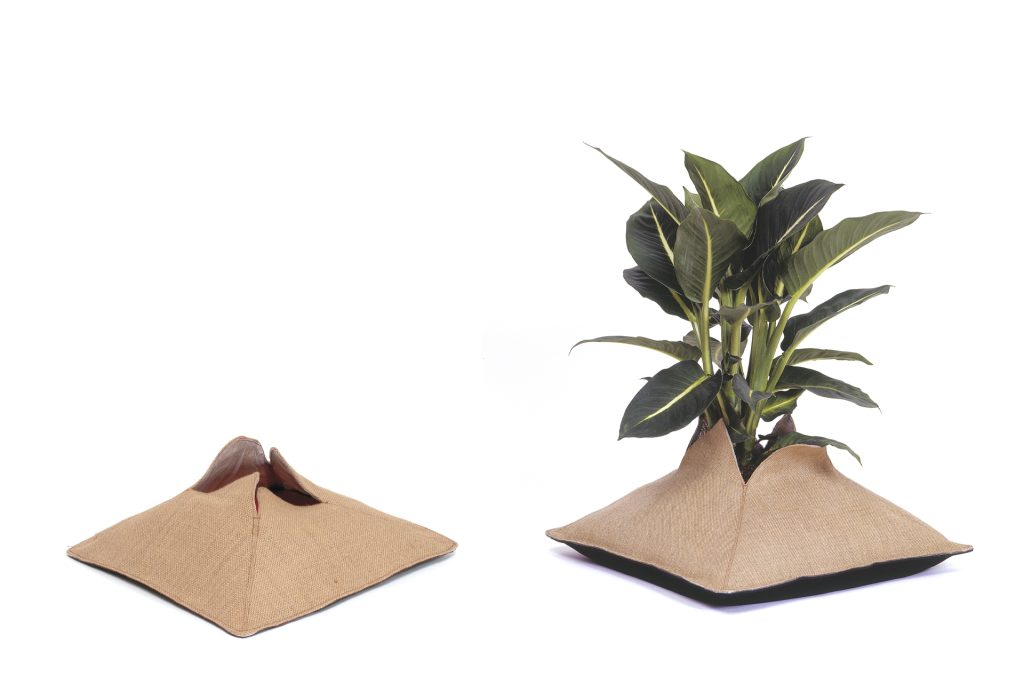
Floreta was created to find a new place and a new sense for aromatic and decorative plants within the domestic landscape.
Floreta is a soft structure, made out of neoprene and jute, that blends in well with any household setting: a cushion that frees plants from their pots, uprooting them from their natural world, from outdoors, to meekly add them as part of the household furnishings, so crossbreeding the agricultural world with the domestic environment.
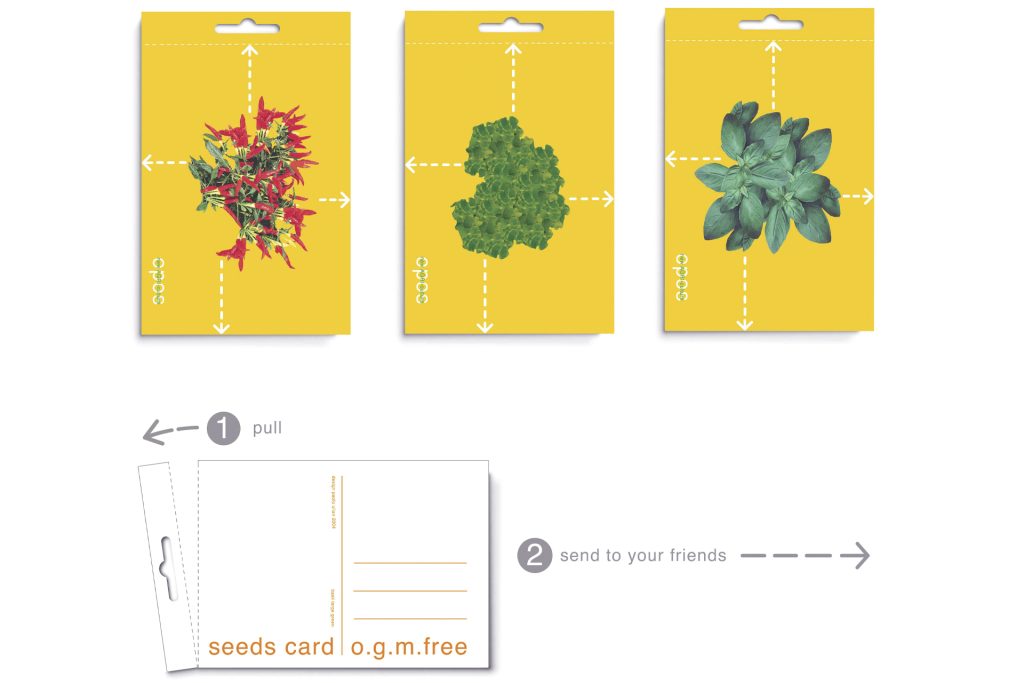
SEEDS CARD | O.G.M. FREE
PAOLO ULIAN
The habit of growing plants for eating purposes within the home has almost died out, suffocated by the strategies of wide-scale food distribution that can supply any kind of vegetable pre-washed and ready to eat.
Seed Card is a postcard that contains seeds. A simple step-up from the typical seed packet, it can be sent by post to promote an age-old culture and, hopefully, a radical and priority improvement in today’s eating habits. Strictly G..M.O. free.